Upgrading from a Slinger Bag: Is the Acemate S10 PRO the Right Next Step?
Nov 4, 2026
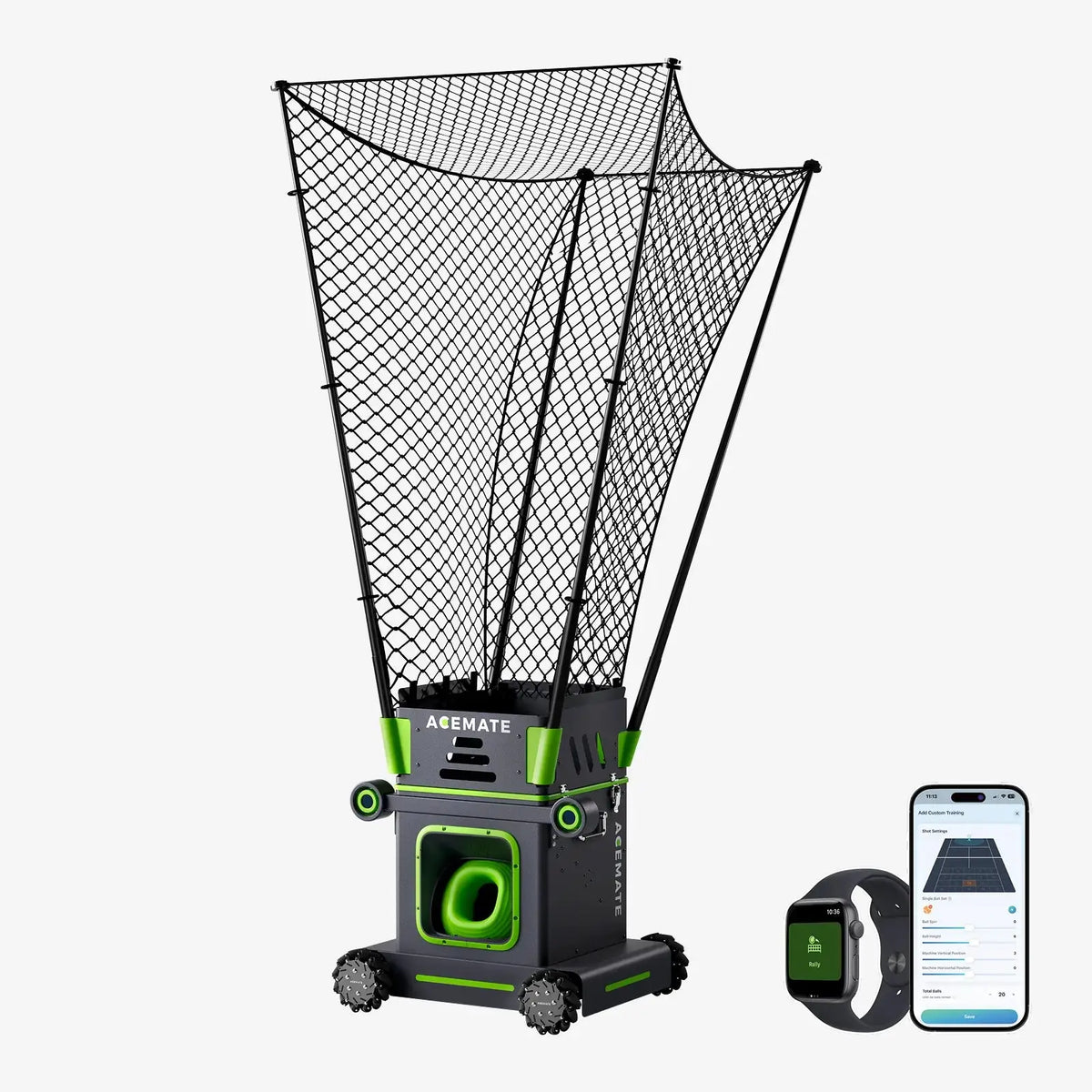
Acemate S10 PRO is a meaningful upgrade candidate if your current Slinger routine leaves you wanting interactive rallies or more configurable training. The strongest reason to change machines is a specific capability you will use, rather than a belief that a higher playing level automatically requires a more expensive product.
This comparison concerns the Slinger Tennis Launcher and Acemate S10 PRO. It uses published specifications, not a side-by-side court test. Check your own Slinger model and package before applying the comparison.
- Identify the missing task. Decide what you cannot currently practise as intended.
- Compare the complete routine. Include controls, transport, setup and ball management.
- Keep useful equipment in perspective. An upgrade should add a needed capability, not merely replace a familiar machine with a higher-priced one.
Quick Verdict
| Your reason for considering an upgrade | What to assess with S10 PRO |
|---|---|
| You want the machine to respond to suitable returns | Watch rally operation using the shots you intend to practise |
| You want to configure a sequence | Demonstrate the settings and changes your exercise requires |
| You want a different delivery range | Test the useful combination of pace, placement and spin |
| You want less effort around practice | Evaluate setup and collection honestly; do not assume either disappears |
If the main problem is inconsistent court access or an unclear practice plan, a different machine may not solve it. Resolve that constraint before deciding the hardware is the limiting factor.
1. Identify what your current practice is missing
Write down the last few sessions you actually completed. What did you practise? Where did the machine support the task? At what point did you want an option it could not provide?
This is more useful than shopping from your rating alone. A strong player might still use straightforward feeds for a particular exercise. A developing player might have a clear use for configurable patterns. Neither case justifies a universal level-based rule.
For a prospective S10 PRO owner, two distinct needs deserve attention: creating the desired feed pattern and incorporating a returned-ball exchange. Be clear which one motivates the upgrade.
If you mainly want fresh ideas for the machine you already own, first try changing the practice structure within its supported settings. Buying another machine becomes easier to assess once the missing capability is explicit.

Published product capabilities and transport tradeoffs; no hands-on comparison claimed.
2. Compare actual product capabilities
| Feature | Acemate S10 PRO | Slinger Tennis Launcher |
|---|---|---|
| Published delivery speed | Up to 75 mph | 10–45 mph |
| Feed interval | 1–15 seconds in Ball Machine mode | 2–7 seconds |
| Training interaction | Designed for suitable returned-ball exchanges as well as feeding | Stored-ball launching |
| Configuration | App-based shot settings and drill sequences | Physical adjustments; remote start/stop |
| Published net/unloaded machine weight | 23.0 ± 0.5 kg | 15 kg |
Sources: official product pages. These are manufacturer figures under their respective conditions. They are not measurements from a common test, and maximum speed does not describe spin or placement performance at that speed.
Slinger's support page explains that oscillation uses a separate plate, with inclusion depending on the package. Check what you already own rather than comparing your complete setup with a bare-machine listing.
For S10 PRO, ask to see the full exercise you want. A supported range of individual settings does not establish that every desired combination is practical.
3. Distinguish changing feed direction from a connected rally
A machine can vary where it sends balls while remaining a feeder. That can still create demanding movement for the player. It should not be described as incapable of footwork practice simply because it does not respond to the returned ball.
Consider the same training goal before and after an upgrade: preparing for the next ball after your shot. With a launcher, the next feed follows the configured delivery. With S10 PRO in Rally mode, a suitable returned ball becomes part of the exchange. In Serve mode, you can instead initiate the point pattern with your own serve and play the robot’s return. This proposed training use is the substantive upgrade case; it is not a measured performance result.
S10 PRO adds a different interaction to evaluate: tracking and receiving suitable returns before sending the next ball back. That is relevant when continuing an exchange is part of your buying requirement.
Try a demonstration with the pace and placement you can sustain. Watch how an exchange ends as well as how it starts. A useful demonstration includes the practical operating boundary, not just the longest successful rally.
Do not expect the robot to collect loose balls or retrieve every wide shot. Plan pauses and collection as part of the session. An upgrade should improve the fit with your practice, not depend on an unrealistic promise of uninterrupted play.
4. Test programming against one concrete exercise
Before comparing interface screenshots, describe a sequence. For example, you may want a consistent starting ball followed by a different placement. Ask how to configure it and how to adjust the task while keeping the rest stable.
Next, ask how the session is paused safely. You should be able to understand the workflow before relying on it alone. A large collection of preset drills is less useful if you cannot find or adjust the exercise you need.
The S10 PRO mode guide can help prepare the demonstration. Treat each mode as something to verify against your exercise, not as proof of a particular performance outcome.
If programmability is your only upgrade requirement, include premium stationary machines in the evaluation. The broader buying guide puts those alternatives in context.
5. Treat transport as part of the upgrade decision
An upgrade may change how you get to the court. Compare the actual load, vehicle access and lifting route. Include balls, accessories and other equipment you usually carry.
The published machine weights differ, so do not assume a new routine will feel like your existing one. Check the storage space and whether you can handle the proposed setup comfortably. On-court mobility does not resolve stairs or a narrow vehicle opening.
For a player with easy access to a regular court, that constraint may be manageable. For someone carrying equipment between venues, it may be central. Both are legitimate purchasing considerations.
Battery life deserves the same attention. Compare your intended session with the conditions behind each published figure. Do not infer equal runtime from different modes or workloads, and do not treat a maximum as a guaranteed schedule.
6. Calculate the incremental purchase without inventing savings
Use the delivered price of the new setup, including any required accessories. If you expect to sell your current equipment, use a realistic estimate separately. Do not assume a particular resale price is guaranteed.
You can divide the net additional cost by planned sessions to understand the size of the investment. That is purchase-cost allocation, not a promise that the upgrade pays for itself. Include uncertainty about how often you will actually train.
Avoid counting saved coaching fees unless your real arrangements change. A machine can support independent practice without replacing the feedback you receive from a coach. Likewise, do not assume that a different machine removes consumable or maintenance costs.
Use the running-cost guide to organise the questions you need answered before buying.
The choice comes down to this
S10 PRO is a relevant next step when you can name the additional interaction or control you want, demonstrate it and fit the equipment into your routine. That is a stronger basis for upgrading than simply reaching a particular playing level.
Keep your current machine's useful role clear. If it still supports the exercise you need, you do not have to dismiss it to make a case for broader capability. Make the new purchase earn its place through a task you will perform regularly.
For a practical next step, check Acemate demo locations and confirm which model the host offers. For a specific setup or delivered quotation, contact the Acemate team.
FAQ
Is S10 PRO a lightweight replacement?
Check the full load you will handle. The published net machine weight is 23.0 ± 0.5 kg, before your complete practice kit. Match the purchase to your lifting and vehicle requirements.
Will S10 PRO remove ball collection from my sessions?
No. Receiving suitable returns is different from collecting loose balls. You still need a safe ball-management routine.
Is more delivery speed enough to justify a new machine?
Not by itself. Evaluate pace together with placement, spin, controls and the exercise you intend to run.
Should I test a robot before replacing my current machine?
A relevant demonstration is useful. Confirm that the model shown can perform your intended exercise and that its setup fits your court routine.
Share Back to Guides