
Private tennis lessons cost $60–$100 per hour on average in the US. The full market range runs from about $40 to $200+ per hour, depending on the city and the coach. Group lessons and clinics run $20–$50 per session. Those numbers look manageable one lesson at a time. The surprise is the annual math: a year of weekly private lessons at $60–$100 adds up to $3,120–$5,200. That is why the lesson decision belongs in the same spreadsheet as the free alternatives: a wall, or a hitting partner. It also belongs next to the one-time cost of a ball machine — $699 entry, $2,199 for the rally tier.
Average cost of tennis lessons: the 2026 ranges
The average cost of tennis lessons in the US breaks into three formats, and the per-hour gap between them is wide enough to change what you buy:
- Private lessons: $60–$100 per hour is the mainstream band. High-demand metro coaches and former tour players push past $150–$200 per hour; a college player teaching on a public court can dip to $40.
- Semi-private lessons (2–3 players): split the private rate. Each player typically pays somewhere between the group and solo rate for the same hour of coaching, with less individual attention.
- Group lessons and clinics: $20–$50 per session. Park-district and club clinics put four to eight players on a court with one coach. You pay a fraction of the private rate and get a fraction of the coach's eyes.
One structural note: almost nobody sells a single lesson at the list rate. Coaches and clubs package lessons in blocks of five or ten, usually with a small per-lesson discount. So the real first purchase is often a five-to-ten-lesson block. At the $60–$100 average rate, that works out to $300–$1,000 upfront rather than a single $75 charge.
What moves the price of private tennis lessons
Three variables explain most of the $40-to-$200 spread.
City and court costs. The same certified coach charges more in New York, San Francisco, or Miami than in a mid-sized Midwestern city. One reason: indoor court time is expensive and gets baked into the lesson price. In warm-weather regions with abundant free public courts, private rates cluster near the bottom of the band.
Coach credentials. Certification tiers, playing history, and reputation each add to the rate:
- A high-school or college player charges around $40 per hour.
- A certified teaching professional runs $60–$100.
- A coach with a tour or Division I résumé charges $150–$200+.
For most recreational players below a 4.0 level, the mid-band coach and the premium coach will spot the same flaws — grip, preparation, contact point. Paying the premium rate mostly buys scheduling scarcity, not different diagnoses.
Private vs group format. Format is the biggest lever you control. A weekly group clinic at $20–$50 costs a quarter of a weekly private habit and still puts a coach on your court. The trade is attention: in a six-player clinic, you might get a few minutes of individual correction per hour. Clinics build fitness and consistency; they rarely rebuild a stroke.
Are tennis lessons worth it?
For technique, yes. A stroke flaw is almost impossible to self-diagnose. You cannot watch your own preparation or feel that your contact point is late. A coach sees the flaw in one rally and corrects it on the spot. If your serve, forehand mechanics, or footwork patterns need to change, lessons are the tool that changes them.
Where lessons are a poor value is repetition. Once the correction is made, what makes it stick is hundreds of balls hit with the new motion. Paying $60–$100 an hour for someone to stand there feeding balls is renting a very expensive ball feeder. The cost-efficient split: buy diagnosis from a human, get repetition from something that doesn't bill by the hour.
The working frequency rule: take one lesson every one to two weeks and hit two or three practice sessions between them. A weekly lesson with zero practice in between is the most common and least efficient pattern — each session re-teaches the last one.
The per-hour math: a season of lessons vs a wall, a partner, or a ball machine
What a year of weekly practice actually costs on each path, at 2026 market rates and current machine prices:
| Practice option | Upfront cost | One year, weekly use | What it gives you |
|---|---|---|---|
| Private lessons | $0 | $3,120–$5,200 (52 × $60–$100) | Diagnosis and technique correction |
| Group clinics | $0 | $1,040–$2,600 (52 × $20–$50) | Coached reps, shared attention |
| Hitting wall | $0 | $0 | Unlimited reps, fixed rhythm, no feedback |
| Hitting partner | $0 | $0 | Real rallies, unreliable scheduling |
| Entry ball machine (Nisplay L1) | $699 | $699 total | Consistent feeds on your schedule |
| Rally robot (Acemate S10) | $2,199 (regular $2,499) | $2,199 total | Moves at up to 5 m/s and returns your shots during training |
The wall is free and underrated — it returns every ball and never cancels. But it feeds back at your own pace and height, and it gives no feedback on whether your fix is holding.
A hitting partner is free and better than the wall — real ball flight, real variety. But your improvement schedule now depends on someone else's calendar. Partners at exactly your level who want to drill are scarce.
An entry ball machine costs less than one season of lessons. Entry machines sell for $699 — under the $720–$1,200 cost of a single 12-week season of weekly private lessons. A crowded mid-tier of stationary launchers sits at $899–$999. At the $60 average-rate floor, a $699 machine pays for itself in about 12 lessons. If you log 100 practice hours in its first year, $699 works out to about $7 per hour. That figure falls toward zero every year after, while a lesson stays $60–$100 per hour forever.
The rally tier changes what a machine can do, at a price below one year of lessons. The Acemate S10 costs $2,199 (regular $2,499). That price sits below the $3,120–$5,200 that a single year of weekly private lessons runs. Unlike a stationary launcher, it:
- moves across the court at up to 5 m/s
- reacts in 0.15 seconds
- uses binocular 4K vision to return balls
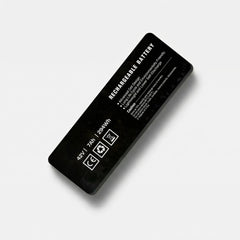
Practice looks like rallying rather than hitting fed balls into an empty court. Its hopper catches your shots during training, which means far less pickup time between reps. It does not collect balls off the ground, so some pickup remains. It runs 40+ training programs spanning NTRP 1.0–5.0 and carries a 12-month international warranty. Feeds top out at 60 mph, and the battery runs up to 2 hours per charge. Higher feed speeds and longer batteries are launcher territory — specs built for hours of stationary feeding. Two hours of continuous rallying covers a full practice session, and rallying is the workload no stationary machine runs at any price.
If you log 150 hours of first-year use, $2,199 works out to about $15 per practice hour. That is a quarter of the $60 low end of the average private-lesson rate. The per-hour figure keeps dropping as long as the machine keeps running.
The smart combo: fewer lessons, more reps between them
The comparison is not lessons or a machine, because they do different jobs. A machine cannot see that your grip is wrong; a coach cannot feed you 400 identical balls a week for free. The cost-efficient structure uses each for what it's for:
- Keep lessons, but space them out. Move from weekly to biweekly: 26 private lessons a year at $60–$100 costs $1,560–$2,600, saving $1,560–$2,600 versus the weekly habit.
- Spend the saved money once on repetition hardware. One year of lesson savings ($1,560–$2,600) covers most or all of the Acemate S10 at $2,199. If the budget stops lower, entry launchers start at $699.
- Use the machine between lessons to drill the exact correction from the last lesson. Arrive at each session with the previous fix already grooved, so the coach spends the hour on the next problem instead of re-teaching the old one. The S10 does this inside real rallies: it moves, returns your ball, and makes you hit the corrected stroke under live ball flight — the exact condition the next lesson tests.
Under this structure each lesson compounds instead of repeating. Total spend in year one — biweekly lessons plus the S10 — is roughly $3,759–$4,799, inside the $3,120–$5,200 a weekly-lessons-only year already costs. With an entry launcher instead, the total is $2,259–$3,299. Either way you add two or three practice sessions a week that the lessons-only path never had. With the S10, those sessions are rallies, not feeds.
FAQ
How much do private tennis lessons cost?
Private tennis lessons cost $60–$100 per hour on average in the US in 2026. The full range runs from about $40 to $200+ per hour, depending on city, court costs, and coach credentials. Semi-private lessons split that rate between two or three players, and group clinics run $20–$50 per session.
Are tennis lessons worth it?
Yes — for technique changes. A stroke flaw is nearly impossible to self-diagnose, and a coach spots and corrects it in one session. Lessons are poor value as a source of repetition, because most improvement hours are practice reps. A wall gives those reps free. A partner is free but unreliable. A ball machine costs $699–$2,199 one time. None of them bills a $60–$100 hourly rate.
How many tennis lessons do I need?
There is no fixed number — it depends on how much you practice between sessions. A lesson every one to two weeks, with two or three practice sessions in between, converts coaching into lasting change far faster than weekly lessons with no practice. Each session builds on a correction you've already grooved instead of re-teaching it.
