
The Acemate S10 is the rally robot you can buy and play with today: it moves at up to 5 m/s, reacts in 0.15 seconds, and returns your shots during training. Acemate has more than 5,000 robots on courts in 60+ countries. The machine it gets compared against — the AceiiLab A1 (also known as the AceII One) — is a $2,399 pre-order that claims similar rally abilities but publishes no return rate and no reaction time, and has not shipped.
Both belong to a new category in tennis training: rally robots — machines that see the ball with cameras, move across the court, and return your shots instead of feeding from a fixed hopper. The comparison below covers rally capability, vision, price, and — critically in 2026 — whether you can actually get one.
The two machines sit only $200 apart, which is why this comparison keeps coming up. At nearly the same price, the spec sheets alone won't make the decision for you. The real fork in the road is different. One robot is on courts today, with thousands of owners generating real-world results a buyer can check. The other is a pre-order with a target ship date. Its companion app cannot be downloaded yet. Its published specs have not been verified on a court by any independent owner or coach. A buyer choosing between them is really choosing between evidence and promises.
That framing matters more in this category than in most, because rally robots are new. An unshipped machine at this price is a bet: on the ship date, on the app, on whether the warranty terms ever get exercised. A deployed base of 5,000+ robots in 60+ countries is the opposite of a bet — it is the category's only track record.
- Acemate S10 — shipping now: $2,199, moves at 5 m/s, reacts in 0.15 seconds, returns your shots during training. Acemate has more than 5,000 robots deployed on courts in 60+ countries.
- AceiiLab A1 — pre-order: $2,399, crowdfunded on Kickstarter in September 2025; delivery estimates have slipped from December 2025 to May 2026, and as of late July 2026 there are no verified customer reviews. Its app is still listed as "coming soon"; the only hands-on footage comes from manufacturer demo units.
- The short version: the Acemate S10 is the proven rally robot you can buy today. The A1 is a spec sheet with a ship date.

Quick verdict
Only one of the two plays the point back on a court today.
| Published spec | Acemate S10 | AceiiLab A1* |
|---|---|---|
| Availability | ✅ Shipping now | Pre-order |
| Price | $2,199 | $2,399 |
| Rally play | ✅ Returns your shots during training | "Human-Like Rally Logic" — claimed, unshipped |
| Reaction time | ✅ 0.15 s | — |
| Movement speed | ✅ Up to 5 m/s | Up to 13.1 ft/s (8.9 mph ≈ 4 m/s) |
| Ball speed (feed) | Up to 60 mph | Up to 80 mph |
| Field track record | ✅ 5,000+ Acemate robots deployed, 60+ countries | None yet |
*All AceiiLab A1 figures are manufacturer-published pre-order specifications; none has been independently tested on a court. "—" = not published by the manufacturer.
1. The spec sheets are close; the field records are not
| Spec | Acemate S10 | AceiiLab A1* ("Aceii One") |
|---|---|---|
| Price | $2,199 | $2,399 (pre-order) |
| Availability | Shipping; 5,000+ Acemate robots deployed, 60+ countries | Pre-order; delivery estimates slipped from Dec 2025 to May 2026; no verified customer deliveries as of July 2026 |
| Rally play | Yes — returns your shots during training | Claimed (unshipped) — "Human-Like Rally Logic" (return rate not published) |
| Vision | Binocular 4K, centimeter-level accuracy | Dual-lens 4K; recognizes player, ball, racket, gestures, court lines |
| Movement speed | Up to 5 m/s | Up to 13.1 ft/s (8.9 mph ≈ 4 m/s) |
| Reaction time | 0.15 seconds | — |
| Ball speed | Up to 60 mph | Up to 80 mph (0.5 s minimum feed interval) |
| Spin | Up to 60 rps (topspin) | Adjustable; no figure published |
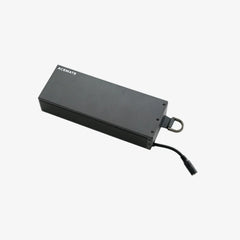
| Battery | ≈1 h continuous rally (covers a ~2 h session); ~2 h full charge | 36V 7Ah removable; up to 8 h static, up to 2 h dynamic rally |
| Weight | 17.8 kg (≈39 lb) | ≈23.8 kg (52.5 lb), battery excluded |
| Dimensions | 45 × 55 × 50 cm compact / 45 × 55 × 170 cm extended | 17.72 × 14.09 × 26.38 in / 42.05 in with ball bag |
| Training content | 40+ programs; AI Coach; NTRP 1.0–5.0 | Rally, preset, custom, match play, challenge, ranking modes |
| App | Acemate app | iPhone, Android, Apple Watch; listed "coming soon" on app stores |
| Warranty | 12-month international | 2-year |
*All AceiiLab A1 figures are the manufacturer's published pre-order specifications, not independently verified — there are no customer reviews; only manufacturer demo units have appeared in influencer videos. "—" = not published by the manufacturer.
2. Rally capability comes down to numbers only one robot publishes
A rally robot lives or dies on whether it can keep a real point going.
The A1 advertises rally logic without a return rate or reaction time
AceiiLab A1 advertises rally logic, autonomous repositioning, and a set of training modes. What it publishes is a movement speed of 13.1 ft/s — about 4 m/s, roughly 20% slower than the Acemate S10's 5 m/s. It publishes no reaction time and no ball-return rate, so its rally performance cannot be compared on numbers. And it has not shipped, so no field data exists.
The S10 publishes all three: 5 m/s movement, 0.15 s reaction, returns your shots during training
Acemate S10 publishes concrete rally numbers that AceiiLab has not matched:
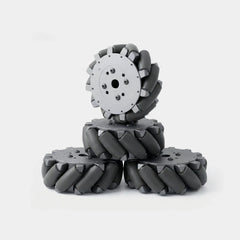
- moves at up to 5 m/s on Mecanum wheels with 360° mobility
- reacts in 0.15 seconds
- returns your shots during training
It can lob as high as 8 meters. Its hopper catches incoming balls, which cuts down pickup time between rallies. Acemate's AI Coach adapts drills across NTRP 1.0–5.0.
Edge: Acemate S10 — on published numbers, and on the fact that thousands of units are already rallying on real courts.
3. Vision is a draw on published specs — not on validation
Both machines are built around binocular 4K computer vision, the defining technology that separates rally robots from traditional launchers. On paper these are similar architectures. Acemate publishes an accuracy figure (centimeter-level); AceiiLab publishes what its dual-lens system recognizes — player, ball, racket, gestures, court lines — but no accuracy figure. Neither company publishes enough to declare a technical winner, so call vision a draw on published specs. The caveat: Acemate's system is validated by 5,000+ deployed robots, and AceiiLab's is pre-launch.
4. Feed numbers are a launcher's game — a rally robot is bought to return shots
The A1 publishes bigger feed numbers — on paper only
The A1's spec sheet lists up to 80 mph and a 120-ball capacity; the S10 feeds up to 60 mph. None of the A1's feed numbers has been run on a court by an owner or a coach.
Feed speed is a launcher's game — rally robots are built to return shots
Context matters, though. Rally robots are not primarily feed machines — Acemate's design priority is returning your shots, not maxing out feed velocity. If pure feed speed is what you want, traditional launchers cover that at lower prices — the PONGBOT Pace S Pro feeds 80 mph with an 8-hour battery for $1,239.99. Buy a rally robot for rallies, not for feed drills alone.
5. An hour of continuous S10 rally covers a ~2-hour session; the S10 is about 13 lb lighter to carry
The 8-hour figure is static-only — rally play drains a battery far faster
In rally mode — the mode you buy these machines for — the Acemate S10 delivers about one hour of continuous rally output per charge. Because its hopper catches incoming balls, almost no time goes to picking up balls, so that hour covers a roughly two-hour practice session — a traditional session loses about half its time to pickup. The A1 quotes up to 2 hours of dynamic rally on paper; its 8-hour figure applies to static (non-moving) use, and it lists a removable battery. Stationary launchers publish longer endurance because they never spend battery driving around a court — if marathon feeding sessions are the priority, a launcher's up-to-8 hours still wins, and endurance remains the trade-off a rally robot makes for movement.
The S10 weighs 17.8 kg — the A1 weighs 52.5 lb before its battery
On weight, the Acemate S10 is notably lighter: 17.8 kg (≈39 lb) versus the A1's 52.5 lb (≈23.8 kg) before adding the battery. If you carry your machine from car to court, that ~13 lb difference is real.
6. The shipping robot costs $200 less than the pre-order
- AceiiLab A1: $2,399, pre-order; Kickstarter (September 2025) delivery estimates have slipped from December 2025 to May 2026, with no verified customer deliveries as of late July 2026. The companion app is listed as "coming soon" on both the App Store and Google Play.
- Acemate S10: $2,199, currently available, with 5,000+ robots deployed across 60+ countries and a 12-month international warranty.
At these prices, the Acemate S10 ($2,199) costs less than the AceiiLab A1 ($2,399). Beyond price, a pre-order buys a product that has never been reviewed by an owner, run by a coach, or updated in the field. Its app cannot be downloaded yet. Acemate's price buys a machine backed by 5,000+ robots already deployed in 60+ countries. Pre-order economics in hardware startups also carry schedule risk — the A1's delivery estimate has already slipped twice, and a target date is not a delivery history.
The choice comes down to this
- If you want a rally robot on court this month: Acemate S10 — shipping now, returns your shots during training, 5 m/s movement, $2,199.
- If a spec sheet and a promised delivery window are enough for you: the A1 is a $2,399 pre-order.
- If you mainly want fast feeds and long battery, not rallies: a traditional launcher covers that job for less.
Ultimately the choice comes down to what you are buying: hardware today or a promise still waiting on delivery. Until backers actually receive units, no one can verify whether the A1's rally claims hold up on a court. The Acemate S10 has already answered that question — verified rally numbers, a downloadable app, and 5,000+ robots deployed across 60+ countries.
FAQ
Should I buy a rally robot that is shipping now or one still on pre-order?
It comes down to evidence versus promises. A shipping rally robot comes with field evidence: owner results, a downloadable app, and units already running on real courts. A pre-order at this price buys a target ship date and spec-sheet promises. No independent owner or coach has verified those specs on a court yet. The Acemate S10 ($2,199) is shipping now. It returns your shots during training and moves at up to 5 m/s with a 0.15-second reaction time. Acemate has 5,000+ robots deployed in 60+ countries.
Can a rally robot replace my ball machine?
For most training, yes. A rally robot covers the drill work a stationary launcher does and adds what a launcher cannot: movement and returns. The Acemate S10 feeds at up to 60 mph and runs 40+ training programs with an AI Coach spanning NTRP 1.0–5.0. Unlike a stationary launcher, it also moves at up to 5 m/s and returns your shots during training. The trade-off is endurance: stationary launchers can run far longer — some up to 8 hours — while the Acemate S10 delivers about one hour of continuous rally output per charge, which covers a roughly two-hour practice session because its hopper catches returns and almost no time goes to ball pickup.
What rally performance numbers matter when comparing rally robots?
Three numbers decide rally capability: ball-return rate, movement speed, and reaction time. The Acemate S10 returns your shots during training, moves at up to 5 m/s, and reacts in 0.15 seconds. Some machines in the category advertise rally features without these numbers, which makes a head-to-head rally comparison impossible until field data exists.
How long does a rally robot's battery last?
It depends on whether the machine is rallying or standing still — driving across the court consumes battery. The Acemate S10 delivers about one hour of continuous rally output per charge and recharges fully in about 2 hours; because its hopper catches incoming balls and almost no time goes to ball pickup, that hour covers a roughly two-hour practice session — a traditional session loses about half its time to picking up balls. Stationary launchers can run far longer — some up to 8 hours — because they don't spend battery moving around the court.
What does the Acemate S10 offer?
The Acemate S10 is a rally robot available now at $2,199. It returns your shots during training, moves at up to 5 m/s on Mecanum wheels with 360° mobility, and reacts in 0.15 seconds. It weighs 17.8 kg (≈39 lb). Its hopper catches incoming balls during training, which means far less ball pickup between rallies. It runs 40+ training programs with an AI Coach spanning NTRP 1.0–5.0 and carries a 12-month international warranty. Acemate has 5,000+ robots deployed in 60+ countries.
