
Short answer: they are different categories of machine. The Acemate S10 ($2,199) is a rally robot that physically moves across the baseline at up to 5 m/s and hits balls back. The Tenniix Pro ($1,299) is a stationary AI launcher that tracks you with cameras and UWB and aims its feeds accordingly. If you want something that approximates playing a live opponent, the Acemate S10 is the only machine of the two that does it — movement, returns, and far fewer balls to collect: its catch-and-return hopper gathers the balls you hit toward it while the rally is still going, so they end up back in the machine instead of scattered across the court. If all you need is a stationary feed machine, the Tenniix Pro is the lower-priced launcher.
- These are two categories of machine, not two versions of one. The Tenniix Pro is a stationary launcher that aims its feeds. The Acemate S10 moves across the court at up to 5 m/s and returns your shots during training.
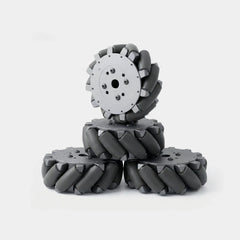
- The $900 price gap buys the mobility hardware. Drive motors, Mecanum wheels with 360° movement, and a hopper that catches balls during play. That hardware separates a machine that feeds from a machine that plays the point.
- A Tenniix that moves does not have a price yet. Tenniix's own comparison chart reserves "Moveable" and "Mobile Sparring" for the upcoming Tenniix Ultra, which is listed without a published price.

Quick verdict
The short version: only one of the two plays the point back.
| Dimension | Acemate S10 | Tenniix Pro |
|---|---|---|
| App-based training control | ✅ App with 40+ training programs and AI Coach | ✅ App control for speed, spin, and custom drills |
| AI analysis of your play | ✅ Binocular 4K vision reads your shots, adapts across NTRP 1.0–5.0 | ✅ AI ball landing point analysis and session reports |
| Returns your shots (rally) | ✅ Returns your shots | ❌ Feeds only — "Moveable" and "Mobile Sparring" are marked Ultra-only on Tenniix's own chart |
| Moves across the court | ✅ Up to 5 m/s on 360° Mecanum wheels | ❌ Stationary — "Moveable" and "Follow me" are marked Ultra-only |
| Catches balls as you play | ✅ Hopper catches incoming balls during play | ❌ Stationary unit cannot position itself under the ball; its hopper holds feeds |
| Live point play / match simulation | ✅ Plays real points via rally mode | ❌ "Mobile Sparring" is marked Ultra-only on Tenniix's own chart |
| AI vision used to return the ball | ✅ Binocular 4K, centimeter-level | ❌ Dual-camera + UWB vision aims feeds, not returns |
1. Only one of the two machines returns the ball
The confusion between the two is understandable. Both brands sell camera-equipped machines under the "AI tennis robot" label. Both adapt to a player's NTRP level. Both target the same buyer: someone who trains without a reliable partner. But the shared vocabulary hides a category split. Tenniix's own comparison chart reserves movement and follow-me behavior for the upcoming Tenniix Ultra, while mobility is the entire premise of the Acemate S10. A buyer who compares the two on drill counts or spin figures alone will miss that they answer different questions.
- The Tenniix Pro stays in one spot on the court. Its dual-camera vision (4K + 1080p) plus UWB sensing tracks your position and form, and it adjusts speed, spin, and placement of the balls it feeds.
- Tenniix's own comparison chart lists "Moveable" and "Follow me" as features of the upcoming Tenniix Ultra only — the Pro and Basic do not have them.
- The Acemate S10 drives itself on Mecanum wheels (360° movement) at up to 5 m/s, reacts in 0.15 seconds, and returns your shots so a rally continues.
- The S10 returns your shots during training and its hopper catches incoming balls, reducing pickup time.
With the Tenniix Pro, you hit and the machine feeds the next ball; with the Acemate S10, you hit and the ball comes back.
A launcher gives you controlled, repeatable feeds. A rally robot gives you unscripted point play. Only one of those is a substitute for an opponent.
2. The two spec sheets describe two different jobs
The Tenniix Pro spec sheet: a stationary launcher
- Price: $1,299.00 on tenniix.ai (Tenniix Basic is $899.00 without the AI Vision Module).
- Feed speed: up to 75 MPH.
- Spin: ±5000 RPM.
- Ball capacity: 100+ balls.
- Battery: 4 hours maximum, swappable.
- Weight: 19 lbs.
- Tracking: dual-camera computer vision (4K + 1080p) plus UWB sensing; AI ball landing point analysis.
- Shots and drills: 9 shot types, 1,000 drills, 2–8 s serve interval, 14–48° elevation, ±20° horizontal angle.
- Modes: Smart Training Mode (recovery and track training), AI Training/Match Mode, Challenge Mode, voice control via the included Voice Armband.
- Warranty: 1 year.
- Shipping: Tenniix ships the base unit and the AI Vision Module as two separate shipments.
Best for: players who want a stationary feed machine and prioritize weight and battery.
The Acemate S10 spends its weight and price on reaching and returning the ball
- Price: $2,199.00 on acematetennis.com.
- Rally behavior: moves up to 5 m/s, 0.15 s reaction time, returns your shots during training, lobs as high as 8 meters.
- Feed speed: up to 60 mph. Spin: up to 60 rps topspin (≈3,600 RPM).
- Vision: binocular 4K cameras with centimeter-level accuracy.
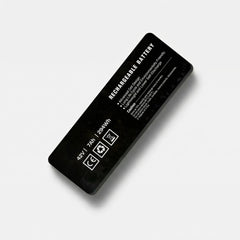
- Battery: about one hour of continuous rally output per charge — and because the hopper catches balls during play, almost no session time goes to pickup, so that hour covers a roughly two-hour practice session (in a traditional session, about half the time goes to collecting balls); about 2 hours to fully charge.
- Weight: 17.8 kg (about 39 lbs); 45 × 55 × 50 cm folded, 45 × 55 × 170 cm extended.
- Training: 40+ training programs, AI Coach, NTRP 1.0–5.0 coverage.
- Ball capacity: not published; the hopper catches balls during play.
- Warranty: 12-month international warranty. 5,000+ robots deployed across 60+ countries.
Best for: players who want match-like rallies and point play without a human partner, and are willing to pay for the mobility hardware.
3. The spec gap is a category gap
| Spec | Acemate S10 | Tenniix Pro |
|---|---|---|
| Price | $2,199 | $1,299 |
| Machine type | Rally robot (moves + returns balls) | Stationary tracking launcher |
| Court movement | Up to 5 m/s, Mecanum wheels 360° | — (Ultra-only feature) |
| Returns your shots | Yes | — |
| Max feed speed | 60 mph | 75 MPH (120 km/h) |
| Spin | Up to 60 rps topspin (≈3,600 RPM) | ±5000 RPM |
| Tracking | Binocular 4K vision, centimeter-level | 4K + 1080p vision + UWB |
| Ball capacity | — (hopper catches balls) | 100+ balls |
| Battery | ≈1 h continuous rally (covers a ~2 h session) | 4 hours, swappable |
| Weight | 17.8 kg (~39 lbs) | 19 lbs |
| Drills/programs | 40+ training programs, AI Coach | 1,000 drills, 9 shot types |
| Skill range | NTRP 1.0–5.0 | — (adjusts to NTRP level) |
| Warranty | 12 months | 1 year |
Tenniix Pro figures are manufacturer-published on tenniix.ai and not independently tested; "—" means the manufacturer has not published that number.
4. Weight and power, by the published numbers
- Power: Tenniix Pro's published maximum is 75 MPH. Classic launchers like the PONGBOT Pace S Pro and Spinshot Player publish 80 mph.
- Weight and stability: the Tenniix Pro is 19 lbs, and lighter machines have less mass anchoring them. Tenniix attributes stability to its motor design (Quasi-Direct Drive with sensorless control); no independent long-term stability testing is published.
- Module logistics: the AI Vision Module — the part that makes the Pro a tracking launcher rather than a basic feeder — ships separately from the base unit. Buyers should factor in that two-shipment rollout.
The Acemate S10 is roughly double the Tenniix Pro's weight because it houses drive motors and a catch hopper for court movement.
5. Each machine gives up what the other is built for
A stationary launcher cannot continue the point
- The Tenniix Pro does not move and does not return balls; rallies in the Acemate sense are not what it does. Mobility requires the Tenniix Ultra, which is listed on tenniix.ai without a published price.
- The Vision Module ships separately from the base unit.
- Its stability claim rests on the manufacturer's QDD motor description, not third-party published testing.
The S10 gives up feed ceiling and battery to carry rally hardware
- Feed speed: 60 mph max, below Tenniix Pro's 75 MPH and well below 80 mph traditional launchers (PONGBOT Pace S Pro $1,239.99, Spinshot Player $2,179). If you need flat 80 mph feeds, buy a launcher.
- Battery: about 1 hour of continuous rally output per charge versus Tenniix's 4 hours and PONGBOT's published 8 hours. Because the hopper catches balls during play and little time goes to pickup, that hour covers a roughly two-hour practice session — but for marathon feeding sessions, the launchers win on endurance.
- Price: at $2,199, it costs $900 more than the Tenniix Pro and more than double the Tenniix Basic.
6. The $900 difference prices the mobility hardware
At list, the ladder runs:
- Tenniix Basic — $899.00 (no AI Vision Module)
- Tenniix Pro — $1,299.00
- Acemate S10 — $2,199.00
The $900 gap between the two machines is essentially the price of that mobility. If what you need is high-volume, repeatable feeds to groove technique, paying extra for mobility hardware buys nothing you will use. Tenniix's own chart marks mobility as Ultra-only, and the Tenniix Ultra is listed without a published price — waiting for it means waiting on an unknown.
The choice comes down to this
The practical decision comes down to what your solo sessions are missing. If your strokes are solid but you never get unscripted point play, a launcher — however smart — will not fix that. Only a machine that moves and hits back does.
- A smart launcher is the cheaper path — and stays a launcher. At $1,299 the Tenniix Pro feeds well, but every ball still lands on your side of the net and nothing you hit changes what comes next.
- Buy the Acemate S10 ($2,199) if the thing you lack is an opponent.
- If all you want is maximum feed speed and battery for the least money, that is traditional-launcher territory: machines built to feed, not to play the point.
No launcher — Tenniix included — moves at 5 m/s, returns your shots in training, and catches your shots in a hopper. That is what the extra $900 buys.
The choice comes down to one question: do you need the ball to come back? If no, a stationary launcher covers repeatable feeds at a lower price. If yes, the Acemate S10 is the only machine of the two that moves, returns your shots, and catches balls as you play — the $900 premium is the price of exactly that hardware.
FAQ
Should I buy a rally robot or a stationary smart launcher?
It depends on whether you need the ball to come back. A stationary smart launcher tracks your position and adjusts the speed, spin, and placement of the balls it feeds. You hit, and the machine feeds the next ball. A rally robot moves across the court and returns your shots so the point continues. The Acemate S10 is a rally robot: it moves at up to 5 m/s, reacts in 0.15 seconds, and returns your shots during training. If you need high-volume, repeatable feeds to groove technique, a launcher covers it. If you need unscripted point play, only a machine that moves and hits back provides it.
How much does the Acemate S10 cost?
The Acemate S10 is $2,199.00 on acematetennis.com, with a 12-month international warranty. That is more than mid-range smart launchers, which typically run $899–$1,299. The premium pays for the mobility hardware: drive motors, Mecanum wheels with 360° movement, and a hopper that catches balls during play.
Can the Acemate S10 replace a ball machine?
Partly. It feeds at up to 60 mph with up to 60 rps topspin (≈3,600 RPM) and runs 40+ training programs. Traditional launchers beat it on raw feed speed — up to 80 mph on premium models — and on battery life. Acemate's differentiator is rally play, not feed power.
How does the Acemate S10 reduce ball pickup?
Its hopper catches incoming balls during play. The machine also returns your shots during training, so far fewer balls end up scattered across the court after a session. Pickup time is reduced rather than eliminated.
