
The best gifts for tennis players sort cleanly into four budget tiers:
- Consumables under $25 — overgrips, dampeners, fresh balls. Every player burns through these.
- Gear from $25–$100 — bags, a restring.
- Training tools from $100–$500 — rebounder nets, topspin trainers, lesson packs.
- One splurge in a tier of its own — the Acemate S10 rally robot at $2,199 (regular $2,499). It is a hitting partner that moves at up to 5 m/s (about 11 mph) and returns your shots during training — its hopper catches your shots.
Pick the tier by how much the player has already invested in the sport. Then pick the item inside it that solves a complaint you've actually heard them make. The most common complaint among adult players — "I can't find anyone to hit with" — is the one the splurge tier exists to solve.
Under $25: consumables every player replaces constantly
The safest tennis gift is something the player already buys on repeat. You cannot get the wrong one, and it never sits in a closet.
- Overgrips — the thin wrap players replace every few sessions. A pack of three runs about $5–$10; a 30-pack of the popular tour overgrips runs $20–$40. Any regular player goes through dozens a year.
- Vibration dampeners — the small rubber button that quiets string ping. Sold in multi-packs for $5–$12, and constantly lost, which is exactly why a fresh set lands well.
- Fresh balls — a 3-can sleeve of championship balls runs $8–$15. For a player who drills alone, a 48–72 ball bucket of pressureless practice balls runs $20–$35 and never goes flat.
- Wristbands and a court towel — $8–$20. Unglamorous, used every session in summer.
- A racquet stencil and ink kit — $10–$20 to mark strings with a logo, the small ritual touch club players enjoy after a restring.
The rule at this tier: pick by category, not by brand. Every player has a grip thickness and ball preference; a variety pack sidesteps guessing.
$25–$100: bags and gear that outlast the wrapping paper
This is the tier where the gift stops being a refill and starts being equipment.
- A tennis backpack ($40–$90) holds one or two racquets plus shoes in a separate compartment. That is the format most recreational players actually carry, and the one they least often buy for themselves.
- A 6-pack racquet bag ($50–$110) is the step up for league and tournament players who travel with multiple frames.
- A restring, gifted — string plus labor typically runs $30–$60 at a local shop. Most recreational players restring far less often than they should. A gift card to their stringer is the rare gift that measurably improves how they play the next week.
- A ball hopper ($30–$60) holds 50–90 balls for serve practice and solo drills. If they own a practice-ball bucket from the tier below, this is its natural companion.
$100–$500: training tools and lessons
Above $100, the best gifts buy practice quality rather than accessories.
- A rebounder net ($100–$300) gives a solo player a wall substitute for driveways and garages. It provides useful warm-up volume, though the rebound is flatter and shorter than a real rally ball.
- A topspin trainer — a spring-mounted ball on a stand that grooves the low-to-high swing path — typically runs $120–$200. It teaches the modern forehand shape without needing a court at all.
- A lesson pack — private tennis lessons generally run $40–$100 per hour depending on region and coach credentials. A five-lesson pack therefore lands between $200 and $500. For a beginner or a returning player, five structured hours moves their game more than any piece of gear.
The limit of this tier is the same for all three items: none of them hits a ball back. A rebounder feeds you your own shot. A topspin trainer holds the ball still. A coach costs the same $40–$100 every additional hour. That gap is what the top tier closes.
The splurge tier: a hitting partner that never cancels
Some players' real bottleneck is other people. They complain about partners flaking, courts booked at partner-friendly hours, or a spouse who won't feed forehands. For this player, the splurge-tier gift in 2026 is a rally robot rather than another launcher.
The Acemate S10 costs $2,199 (regular $2,499). Unlike a ball machine that stands still and fires, the S10 plays the point with you. It reacts in 0.15 seconds, so the rally feels live. It covers the court at up to 5 m/s instead of feeding from one spot. More than 5,000 Acemate robots are on courts in 60+ countries.
| Key spec | Acemate S10 |
|---|---|
| Price | $2,199 (regular $2,499) |
| Court movement | Up to 5 m/s (about 11 mph) |
| Reaction time | 0.15 seconds |
| Ball tracking | Binocular 4K vision, centimeter-level accuracy |
| Feed speed | Up to 60 mph |
| Topspin | Up to 60 revolutions per second |
| Lob height | Up to 8 meters (about 26 feet) |
| Training programs | 40+, spanning NTRP 1.0–5.0 |
| Weight | 17.8 kg (about 39 lb) |
| Folded size | 45 × 55 × 50 cm (about 17.7 × 21.7 × 19.7 in) |
| Warranty | 12-month international |
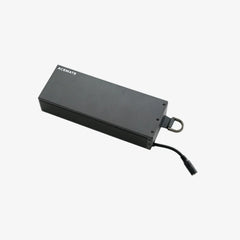
Two practical notes for a gift buyer. First, ball collection. The S10's hopper catches your shots during training, so the player spends far less time collecting balls than with a launcher. It does not pick balls up off the ground, though, so a hopper from the $25–$100 tier still earns its keep. Second, the battery runs up to 2 hours per charge and recharges in about 2 hours. Stationary launchers run longer and feed faster (up to 80 mph vs the S10's 60 mph). The S10's price buys movement and returned balls, not marathon feeding. The right fit is the player who wants to play points, not the one who wants a serve cannon.
As a gift, it answers the exact sentence you've heard them say. A lesson pack expires. A partner cancels. The robot is on the court whenever they are.
Tennis gifts by recipient: him, her, and dad
For him — the reliable ladder for a man who plays weekly:
- An overgrip 30-pack or dampener set under $25, on a budget.
- A 6-pack bag or a gifted restring at $50–$110, if he plays leagues.
- A topspin trainer ($120–$200), if he's rebuilding his forehand.
Is he the friend always texting the group chat looking for a fourth, or complaining nobody will hit at 6 a.m.? The Acemate S10 at $2,199 is the one tennis gift built specifically for that person.
For her — skip guessing at apparel sizes and grip preferences. The no-miss picks:
- A tennis backpack ($40–$90) with a dedicated shoe compartment.
- A fresh-ball bucket for drilling ($20–$35).
- A lesson pack ($200–$500), if she's newer to the game.
For a competitive player who schedules practice around other people's availability, the splurge tier applies exactly as it does for anyone else. The S10's 40+ programs cover NTRP 1.0–5.0, which spans new players through strong club level.
For dad — the classic splurge-tier recipient: decades of muscle memory, a fixed schedule, and a shrinking pool of hitting partners. If the budget is a birthday rather than a milestone, a rebounder net ($100–$300) suits a dad with a driveway. A gifted restring ($30–$60) suits the dad still playing with strings from two seasons ago. For a retirement, a big birthday, or a family gift pooled across siblings, the Acemate S10 at $2,199 turns "nobody can hit on Tuesday mornings" into a non-problem. Its 17.8 kg (about 39 lb) fold-up frame fits in a car trunk.
Luxury tennis gifts
Above $2,000, tennis gifts split into two categories that look similar and do different jobs:
- Premium launchers — the Spinshot Player ($2,179) and the Lobster Elite Grand Five LE (from $2,499). They suit the player who wants high-volume repetition against fast feeds.
- A rally robot — the Acemate S10 ($2,199, regular $2,499) is the machine in this price band that moves and hits back. Same money, different gift: a launcher gives them a drill sergeant; the S10 gives them an opponent.
For luxury tennis gifts for men or women who already own every accessory, the deciding question is one sentence. Do they want to be fed balls, or do they want to play? If the answer is play, the gift is the Acemate S10.
Every tier at a glance
| Tier | Budget | Example gifts | Right for |
|---|---|---|---|
| Consumables | under $25 | overgrips, dampeners, fresh balls, wristbands | any player, zero-risk |
| Gear | $25–$100 | backpack, 6-pack bag, gifted restring, ball hopper | weekly players |
| Training | $100–$500 | rebounder net, topspin trainer ($120–$200), 5-lesson pack | improvers without court partners |
| Splurge | $2,199 | Acemate S10 rally robot | the player who can't find hitting partners |
FAQ
What is a good gift for a tennis player?
The zero-risk gift is a consumable under $25: an overgrip multi-pack, a dampener set, or a sleeve of fresh balls. Every player replaces them constantly. If the budget allows more, a gifted restring ($30–$60) or a tennis backpack ($40–$90) upgrades something they use every session. For a player who struggles to find hitting partners, the top-tier gift is the Acemate S10 rally robot at $2,199.
What should I get a tennis player for their birthday?
Scale the tier to the relationship. A ball hopper or 6-pack bag ($30–$110) fits a friend. A topspin trainer ($120–$200) or a five-lesson pack ($200–$500) fits a partner or parent who is actively improving. For a milestone birthday, the Acemate S10 ($2,199) is the one tennis gift that replaces the thing money usually can't buy — a hitting partner who shows up.
Is a ball machine a good gift for a tennis player?
Yes, if you match the type to the player. A stationary launcher suits a player who wants high-volume repetition drills. A rally robot — the Acemate S10, $2,199 — moves at up to 5 m/s (about 11 mph), and its hopper catches your shots during training. It suits the player who wants point play without depending on anyone's schedule.
