
Most ball machine faults trace back to the balls. Felt sheds inside the machine and glazes the throwing wheels, which lose grip and start delivering slower, flatter shots long before anything breaks. Dead, wet, or matted balls jam the feed. Court grit follows the same path the balls do.
That makes maintenance two jobs: choosing balls that shed less, and removing what the balls left behind. Beyond those two jobs sit the parts that wear out, the symptoms that point to each one, and the line where a repair stops being an owner task.
What Maintenance a Ball Machine Actually Needs
Wipe the throwing wheels and clear the launch port after every session, clean the interior every few sessions, and inspect fasteners and wiring monthly.
|
When |
Task |
|
After every session |
Wipe the throwing wheels, clear the launch port, wipe the exterior |
|
When fuzz is visible in the launch port |
Vacuum or brush the interior and hopper, check the collection net |
|
Monthly |
Inspect fasteners, wheels, and wiring for looseness or wear; check for firmware updates |
|
Seasonally |
Full clean, battery check, then dry storage |
Where to go from here depends on what you are dealing with:
|
Your situation |
Start at |
|
Machine is fine, you want it to stay that way |
Balls, then cleaning |
|
Shots feel weaker than they used to |
Troubleshooting, speed and accuracy |
|
Something jammed or stopped working |
Troubleshooting, by symptom |
|
Putting it away for the winter |
Storage |
Start With the Balls
Pressureless balls shed less felt and survive machine use far longer, which is why they are the standard recommendation for anyone feeding hundreds of balls a session.
Pressurized balls are built for feel, not volume. Their internal gas diffuses out through the rubber core as soon as the can is opened, and play accelerates it, so a machine flattens them quickly. Flat balls feed unreliably, and matted felt is what glazes the throwing wheels. Three rules follow: use dry balls only, retire balls before they cause a jam rather than after, and never put anything other than tennis balls in the hopper. The retirement test is felt first: run a thumb across the nap, and if it is slick, matted, or shedding onto your hand, that ball is now cleaning work. Bounce is the second check, easiest as a side-by-side drop against a new ball from shoulder height. Cost runs the other way at the register, since pressureless balls are pricier per can and cheaper per hour.
Ball choice sets your cleaning interval more than any other single decision, which is why it comes before the cleaning routine rather than after it.
How to Clean a Tennis Ball Machine
Use a vacuum and a brush for the inside, a damp cloth for the outside, and nothing abrasive anywhere.
Two safety rules come first. Never put your hand into the launch port or the ball hopper while the machine is powered on, and power it off completely before clearing a jam. The risk is not that the motors are running; it is that they can start.
What you need on hand: a vacuum with a crevice tool or a soft brush, a couple of microfiber cloths, rubbing alcohol, and mild detergent.
Skip solvents and abrasive cleaners, which damage plastic housings. Skip compressed air too, which drives fuzz deeper into the mechanism rather than removing it. A vacuum pulls debris out; air pushes it in. Mild detergent on a damp cloth is enough for the exterior.
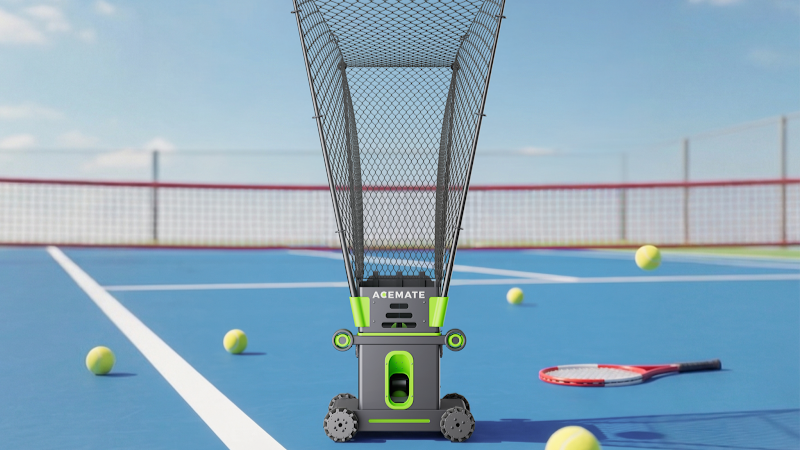
The Acemate S10 ships with a cleaning brush for this, and its own guidance is to clean the surface and launch port after each use, brush ball fuzz out of the interior, and inspect the collection net.

Cleaning the Throwing Wheels
Wipe the wheels with rubbing alcohol after sessions, and scuff them lightly only if speed has dropped and cleaning has not restored it.
The wheels grip the ball through friction. As felt residue builds into a glaze, the wheel slips instead of gripping, and the machine delivers less pace and less spin from identical settings. Owners of older machines sometimes restore grip with a light pass of fine sandpaper or by lifting residue with tape. Check the manual before abrading anything, and on a machine still under warranty ask the manufacturer first.
Cleaning After Clay and Wet Courts
Clean the same day rather than at the end of the month.
Freshly watered clay plus fuzzy balls puts grit through the feed path, and the machine collects clay dust on top of the fuzz it was already collecting. The same applies to any damp surface. Surface changes how the machine behaves before it changes how the machine needs cleaning, and clay, hard, and grass each ask for different settings as well as different cleanup.
How to Store a Tennis Ball Machine
Store it clean, dry, empty of balls, and indoors, with the battery on its own schedule.
- Dry and ventilated. Moisture is the enemy of both the electronics and the felt residue already inside. Ball machines are generally not weatherproof, and the Acemate S10 specifically is not rainproof and should not be used in wet conditions.
- Empty the hopper. Balls left in the machine flatten under their own weight and keep shedding into the mechanism while it sits.
- Not the garage in summer. Heat is the main aging factor for a lithium pack. The S10 is rated to operate between 32 and 104 degrees Fahrenheit, which is an operating spec rather than a storage one, but an unconditioned garage clears the top of it either way.
Off-Season Storage and Restart
Full clean, a partial charge on the battery rather than full or empty, indoors, then a check every couple of months rather than a single glance in April.
The failure mode is not dramatic. A machine put away dirty in October has spent five months with felt residue hardening on the wheels, and a pack left untouched can self-discharge into a state it does not recover from well. Coming back, run a short session before you need the machine rather than discovering a fault on the first good day of spring. If you play through the winter instead, indoor training removes the storage problem but adds a transport one.
How Should Tennis Balls Be Stored?
Sealed, cool, and out of sunlight, though it matters far less for the pressureless balls a machine should be running.
A pressurized ball starts losing bounce the moment the can opens, because gas diffuses out through the permeable core. Resealable pressurized tubes slow that; an open bag in a hot trunk speeds it up. Pressureless balls have no internal pressure to lose, so their requirement is simply dry and out of direct sun. Their wear shows up as felt loss instead, which is what your machine cares about.

Battery Care and Replacement
Judge the battery by runtime measured under conditions you have controlled for, not by how old it is.
Compare like with like: same mode, same feed interval, similar temperature. A shorter interval, colder weather, or switching to a mode where the machine moves will all cut runtime with nothing wrong. A pack that used to cover a full session and now dies halfway through, with none of those changed, has aged out. Sudden shutdowns at moderate charge levels point the same way.
Storage state differs by chemistry, and getting it backward is an easy way to shorten a pack's life: lead-acid must be stored full, lithium should not sit at either extreme. Runtime, charging time, and battery care all follow from which chemistry is in the machine.
Tennis Ball Machine Parts That Wear Out
Four assemblies account for nearly all replacements.
|
Part |
Typical symptom |
Owner-replaceable |
|
Battery |
Runtime drops under controlled conditions |
Usually, on machines with removable packs |
|
Throwing wheels |
Speed and spin fall off from the same settings |
Sometimes; varies by machine |
|
Feed carousel or paddle |
Balls jam or feed erratically |
Sometimes |
|
Net, hopper, or catch assembly |
Balls bounce out or the hopper sits loose |
Usually |
Before assuming a part has failed, rule out the cheap causes. Loose fasteners, a ball stuck out of sight, and a connector shaken loose in transport all produce symptoms that look like component failure and cost nothing to check.
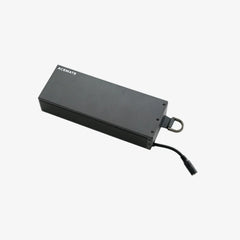
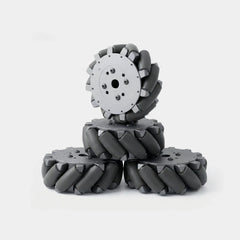
Owner-replaceable means a part sold for the purpose and fitted the way the manual describes. Anything else goes through support. The catch assembly only exists on machines that return your shots; a plain feeder has no equivalent. Availability matters more than price, and it is a question to ask when comparing machines rather than after the fact. Acemate sells the battery, the Mecanum wheels, and net components separately, with the rest listed under accessories.
Troubleshooting a Tennis Ball Machine
Work from the symptom you can see, and start with the checks that need no tools. These are diagnostic steps, not repairs; see the warranty note below before opening anything on an Acemate machine.
|
Symptom |
Check first |
Likely cause |
What to do |
|
Won't feed balls |
Is the feed carousel turning? |
Not turning points at the feed mechanism. Turning but nothing reaching the launcher usually means a wedged ball, a foreign object, or balls too flat to drop |
Empty and reload with good balls. A stalled carousel is a service issue |
|
Feeds but won't launch |
With the carousel empty, do the launch motors spin? |
Silent motors point at the motor or its wiring. Spinning motors usually mean a ball jammed between the launch wheels |
Power off first. The S10 manual's procedure is to remove the screws on both sides of the main body, lift the hopper clear, and take the ball out |
|
Speed or accuracy has dropped |
Wheels, then battery, then balls, in that order |
Glazed wheels slip. A tired battery sags later in a session rather than from the first ball. Flat balls do not launch the same |
Clean the wheels, compare runtime under matched conditions, replace worn balls before suspecting the motors |
|
Won't power on |
Charge, temperature, switch |
Acemate lists three causes for the S10: battery too low, ambient temperature outside 32 to 104°F, or a switch that has sprung back |
Charge it, bring it indoors, and press the switch until it stays engaged |
|
Won't move (self-driving) |
Indicator light, then manual control in the app |
Green or blue means it powered up correctly. No response to manual commands means a drive fault rather than a drill setting |
Stop using it and contact support |
|
Tracking or catching errors |
Lenses, then firmware, then the court |
Rarely hardware. Usually lost court lines, something yellow and round in the background, or stray balls rolling through view |
Clean the lenses, apply any firmware update, clear the court, then run camera calibration |
Vision faults are almost never mechanical, so software and surroundings come before any thought of a hardware problem, and the calibration steps are in the user guide. A machine that moves also needs clearance while it runs, whatever else is being diagnosed.
What You Own Changes What You Maintain
The more the machine does, the more there is to keep clean and calibrated.
A basic fixed feeder has wheels, a feed mechanism, and a battery, and that is the whole maintenance surface. A programmable or AI model adds software that needs updating and settings that can be mistaken for faults. A machine that drives itself adds drive wheels, court-line dependency, and cameras whose lenses matter as much as the launch port, which is one of the practical differences between stationary and mobile machines that rarely shows up in spec comparisons.
None of that makes a smarter machine higher maintenance in hours. It changes what the hours go toward. Build quality matters more than feature count here, since the gap between budget and premium machines usually shows up first in how long the feed mechanism and wheels last.
The same logic applies to the Acemate S10 Pro. Its dual 4K HDR vision system and four Mecanum wheels add two maintenance points beyond the launch system itself: keep the camera lenses clean enough for reliable court and ball tracking, and check the drive wheels for debris that could interfere with movement. Those checks matter most in Rally, Drill, and Battle sessions, where the robot is actively reading the court and moving rather than simply feeding balls.

Repairs, Warranty, and When to Call Support
If an Acemate machine develops a fault, stop and contact Acemate support rather than attempting a repair yourself.
Routine care is yours: cleaning, changing balls, clearing a jam using the procedure in the manual, swapping the battery, and fitting the accessories sold for the machine. Repair is not. That includes opening the housing, motors, drive components, control boards, and anything involving internal wiring. Damage caused by unauthorized repair or disassembly falls outside warranty coverage, so an attempted fix can turn a covered fault into a bill. Check your warranty terms before touching anything you are unsure about.
When you get in touch, send the symptom, what you already checked, and when it started. The Acemate S10 app has a data diagnostics function that submits device logs alongside your description, which shortens the back and forth considerably; otherwise, reach the team directly.
Frequently Asked Questions
How Do I Sanitize Tennis Balls?
Wipe them with a damp cloth and let them dry fully. Washing or machine-drying soaks and mats the felt, which ruins the nap and makes the balls worse for machine use than they were dirty. Replace rather than deep-clean.
Why Do People Put Tennis Balls in the Refrigerator?
To slow the pressure loss that makes pressurized balls go flat. The gas escapes by diffusing through the ball's permeable core, faster once the can is opened. It is a moot point for machine owners, since pressureless balls have no internal pressure to preserve.
What Happens If a Ball Machine Gets Rained On?
Get it dry and do not power it on until it is. Ball machines are generally not weatherproof, and Acemate states plainly that the S10 is not rainproof. Water reaching the electronics is the failure most likely to end a machine outright.
How Often Does a Ball Machine Need Servicing?
An annual check is the common recommendation for machines in regular use, on top of after-session cleaning. Bring it forward if shot speed has drifted, if the feed mechanism makes a new noise, or if jams have become routine.
