


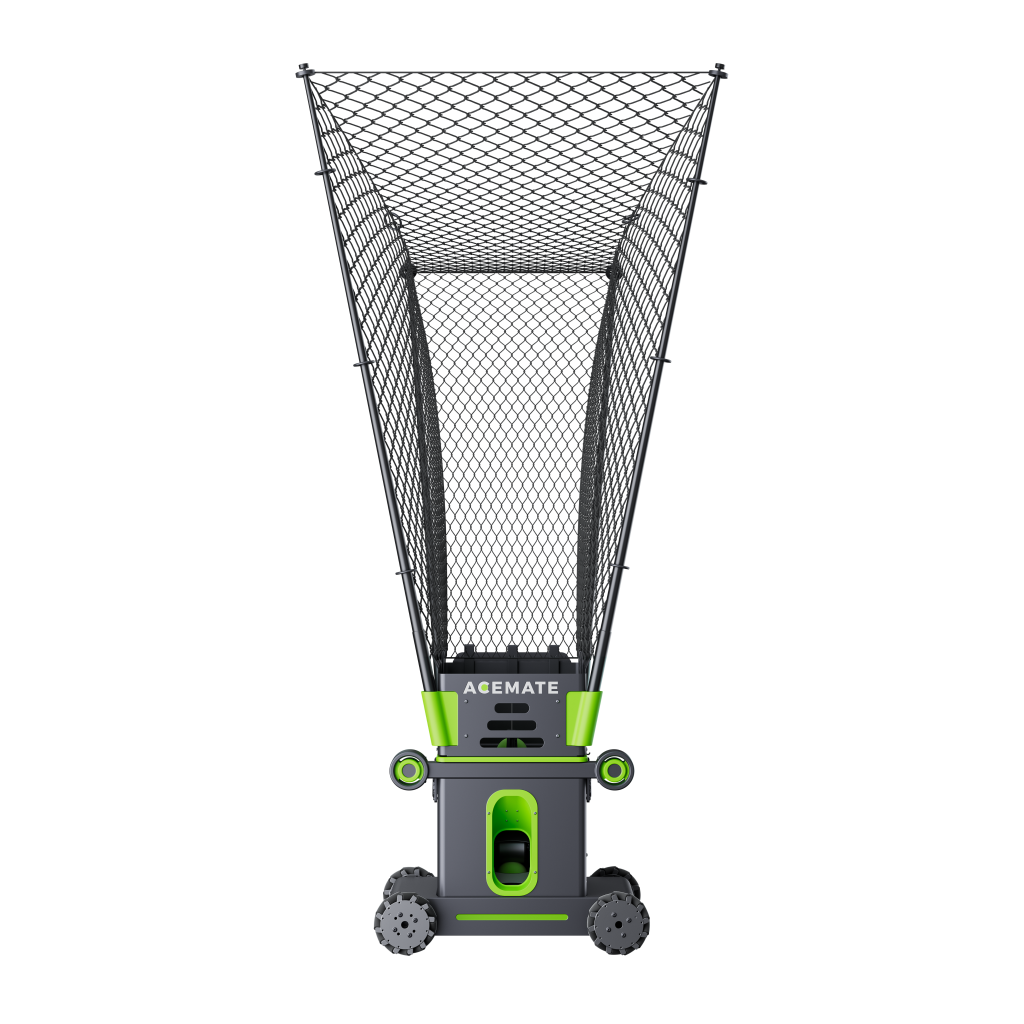
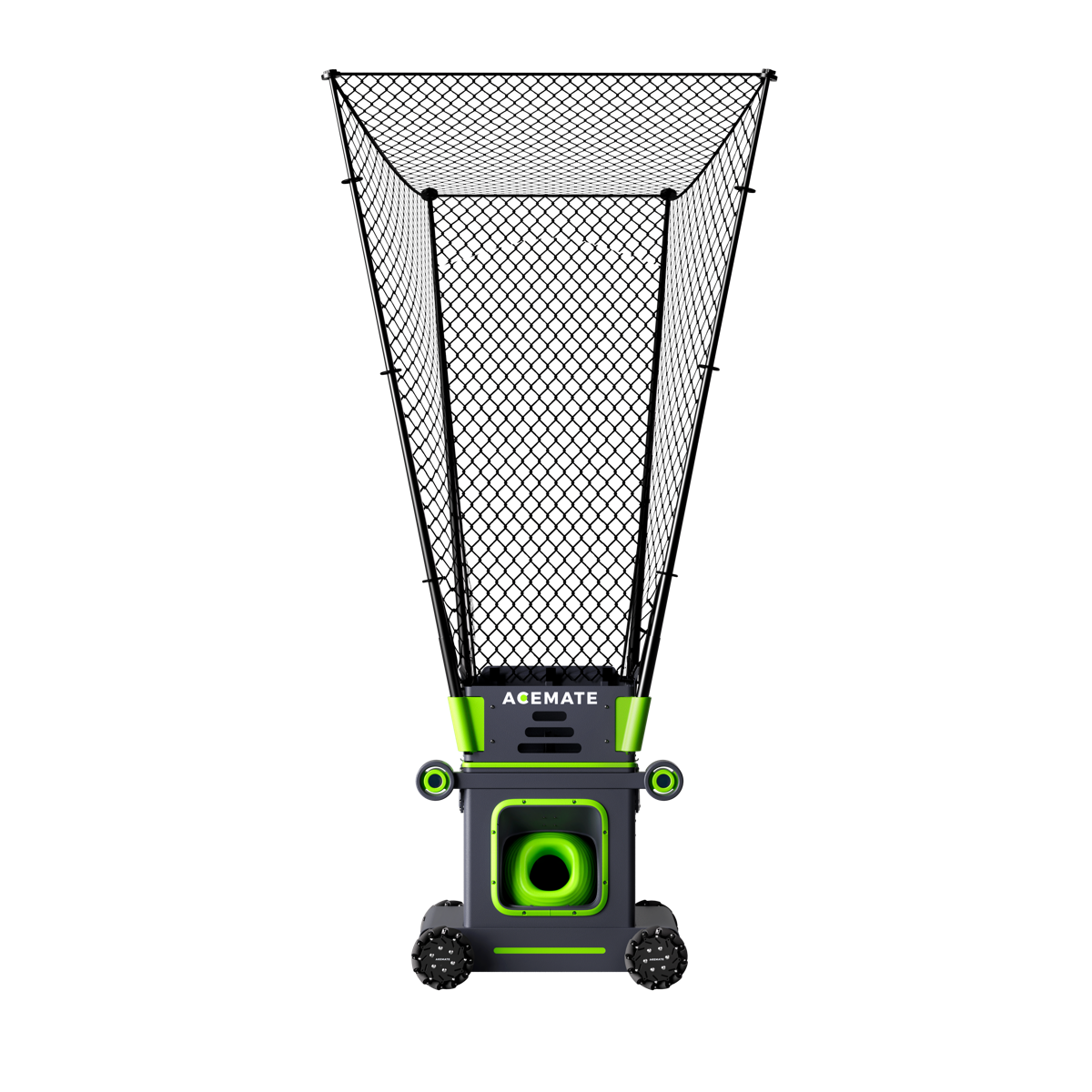

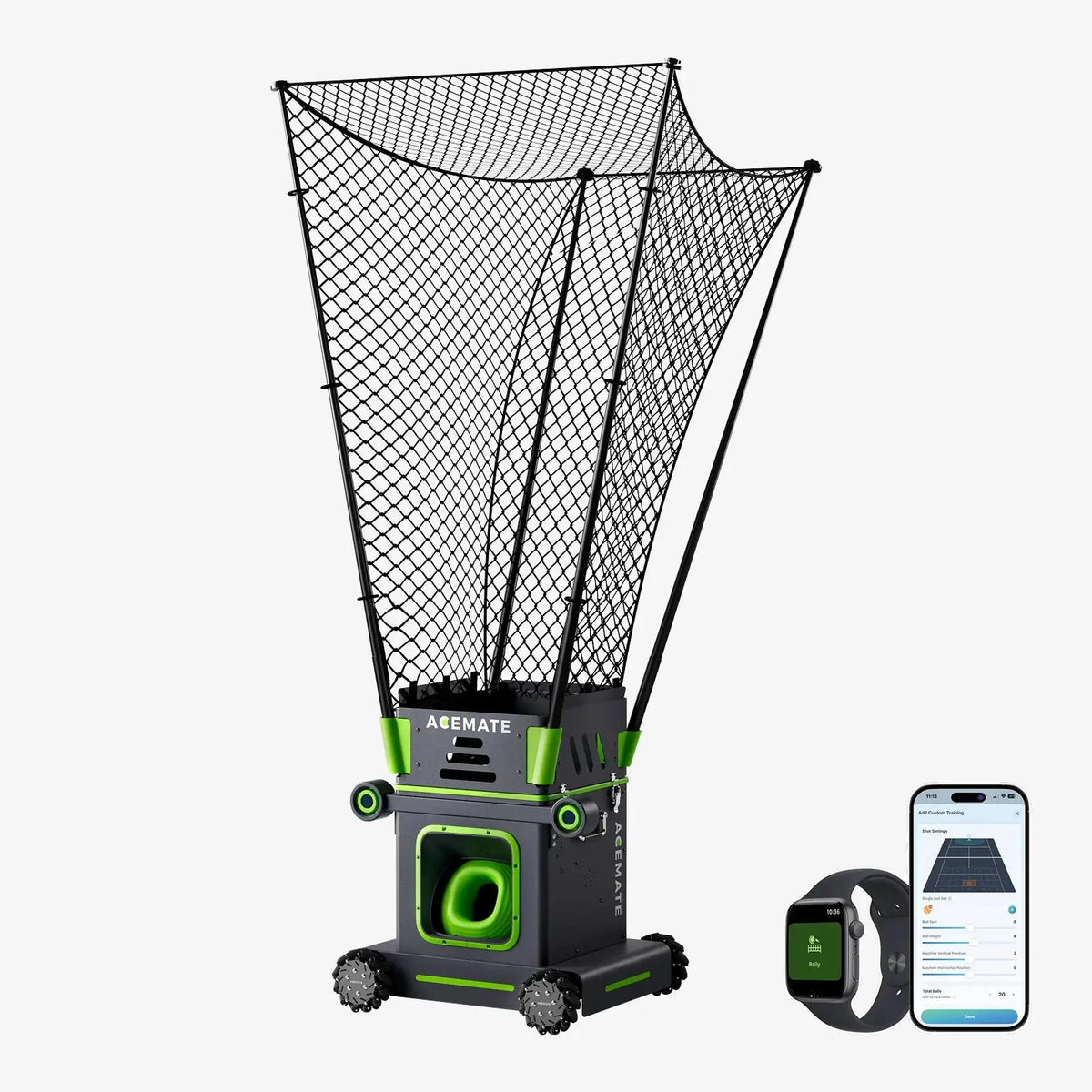
Choose Acemate S10 PRO when its additional delivery capability and capacity support exercises you expect to use. Choose S10 when its capabilities cover your intended practice and the extra investment would not solve a clear need. Playing level is useful context, but it should not make the decision on its own.
This guide compares the two models as current purchase options. The question is which machine fits your training.
- Match the model to your goals. A beginner, club player and coach may need different sessions, but labels alone do not settle the purchase.
- Identify the additional capability. Make the case for PRO around something you will use.
- Check practical fit. Frequency, court access, transport and budget affect the value of either model.
Quick Verdict
| Player or buyer | Current training task | When PRO is worth prioritising | When S10 may be sufficient |
|---|---|---|---|
| Beginner | Controlled practice and building a routine | Shared use or a defined plan that needs PRO's additional functions | Everyday exercises fit S10's supported settings |
| Intermediate club player | More varied sessions and developing point patterns | Serve-plus-one practice or additional delivery headroom is part of the plan | The intended rally and drill routine already fits S10 |
| Advanced player | Specific combinations of pace, placement and spin | The required exercise needs capabilities demonstrated on PRO | Technical repetition stays within the evaluated S10 range |
| Coach or shared household | Different tasks across several users | PRO's mode range and capacity serve identifiable sessions | Users' actual requirements do not need the additional capability |
These are editorial fit recommendations, not official rating thresholds or evidence that a player will improve faster with either model.

Model selection follows training needs rather than a fixed player-rating threshold.
1. Understand the measurable differences
| Published specification | S10 PRO | S10 |
|---|---|---|
| Maximum ball speed | Up to 75 mph | Up to 60 mph |
| Stored-ball capacity | 100 balls | 80 balls |
| On-court movement | 360° movement | 360° movement |
These figures come from Acemate's official model comparison. Maximum values do not describe every setting or establish the quality of a player's practice. The delivery-speed difference is not a measured improvement in rally performance.
The PRO product page labels Serve and Battle as new in S10 PRO. Serve mode is for serving to the robot and playing its return. Battle offers match-style challenges against AI opponents with different styles and difficulty levels. These are more specific reasons to investigate PRO than player level alone.
The PRO product page also describes ACE+ SHOT horizontal and vertical aiming. Ask to see the shot combination you intend to use, rather than treating the technology name as a substitute for an exercise.
Do not base the choice on a simple ratio between published battery figures. Operating mode and settings matter. Confirm expected runtime for the actual practice routine you plan, particularly if it includes substantial movement.
2. For beginners, start with consistency and a practical routine
If you are learning to sustain controlled shots, identify the feed and recovery task you can manage. You do not need to use a machine's maximum speed to benefit from owning it.
S10 may be sufficient if its supported settings cover your everyday practice. That is a needs-based conclusion, not a claim that all beginners should buy the lower model.
S10 PRO can still be relevant to a beginner with a specific use case. A shared household, for example, may include players with different requirements. Another buyer may already have a coach-led plan that uses particular capabilities.
Keep those reasons concrete. “I might need everything later” is difficult to evaluate and can lead to paying for features that remain unused. Ask for a demonstration at your current pace and confirm how the task can be adjusted as your needs change.
For junior players, involve the responsible adult and coach in the equipment decision. Follow the operating instructions and appropriate supervision rather than assuming a skill label establishes safe independent use.
3. For intermediate players, identify the exercise that changes the decision
A club player may practise several times a week but still have a narrow machine requirement. Another player with the same rating may want a broader set of exercises. That is why frequency and level should be considered alongside the training goal.
Write one session that you would complete with S10. Then identify what you would do differently with S10 PRO. If you cannot name a meaningful difference, investigate further before paying the premium.
For example, you might want additional delivery headroom for a specific exercise, or more stored balls for a chosen feed block. Confirm the relevant settings and whether the extra capacity changes your routine in a useful way.
Avoid treating a fuller hopper as a promise of uninterrupted practice. You still need collection, rests and adjustments. A structured session may include pauses before either model's stored-ball capacity becomes the limiting factor.
4. For advanced players, evaluate the full shot combination
S10 PRO deserves close attention when your training requires capabilities beyond the S10 settings you have evaluated. But being advanced does not mean every drill requires the highest available speed.
Ask to see the intended pace together with placement, trajectory and spin. Separate what the machine can do at a maximum setting from what it can repeat under the combination you need.
Also distinguish feeding from rally interaction. A difficult feed pattern and a suitable returned-ball exchange place different demands on the machine. Validate the mode that matches your plan, rather than assuming one demonstration proves every use case.
The advanced-player buying guide provides broader purchasing context. Use the S10 PRO mode guide to prepare model-specific questions.
5. For coaches and shared users, compare the whole schedule
A machine serving different players needs to fit more than one intended exercise. List the settings each person needs and how you will change between them.
S10 PRO's additional capacity may matter for particular feed blocks, but it does not establish suitability for every team or academy schedule. Confirm the actual usage requirements, charging plan and warranty terms applicable to the purchase.
For private coaching, demonstrate the pause-and-adjust routine as well as the feed. The machine should fit the lesson structure you use. Do not assume it will create additional lesson capacity or replace instructional judgement.
For a household, agree on transport, storage and court availability. Shared use may strengthen a buying case, but only if the equipment will realistically be used by the people included in your plan.
6. Compare the premium with your real frequency and budget
Use current delivered quotations for both models. Confirm the included items and any additional equipment you need. Avoid building the decision around a temporary promotional gap that may change before purchase.
Then write your expected sessions over a defined planning period. Divide the additional purchase cost by those sessions if you want a simple allocation. Keep the assumptions visible and do not mistake that figure for a total ownership cost.
Use a lower-use scenario too. If court access is uncertain or you travel frequently, the premium will be spread across fewer sessions. This does not automatically make PRO the wrong choice; it clarifies what you are paying for each expected use.
Maintenance and consumables need separate treatment. A published replacement-part price does not prove how often the part will need replacement. The running-cost guide explains that distinction.
The choice comes down to this
Choose S10 PRO for a requirement you can identify, demonstrate and use regularly. Choose S10 when it covers your intended sessions and the additional capability would not change them meaningfully.
Before ordering, describe your playing level, two typical exercises, weekly frequency and transport constraints. That combination is a better basis for model selection than “beginner” or “advanced” alone.
For a practical next step, check Acemate demo locations and confirm which model the host offers. For a specific setup or delivered quotation, contact the Acemate team.
FAQ
Is S10 PRO only for advanced players?
No. Its suitability depends on the capabilities you need and how you intend to use them. A lower-level player may have a valid reason to choose it.
Is S10 unsuitable for a strong player?
Not automatically. A strong player may want exercises that fit S10's capabilities. Confirm the intended settings rather than deciding from the player's label.
Does S10 PRO guarantee better training results?
No. Additional capability is not a measured improvement guarantee. Results depend on how practice is designed and carried out.
What should I bring to a product demonstration?
Bring a description of your intended exercises, court conditions and transport routine. Ask to see the specific model and settings you are considering.
