


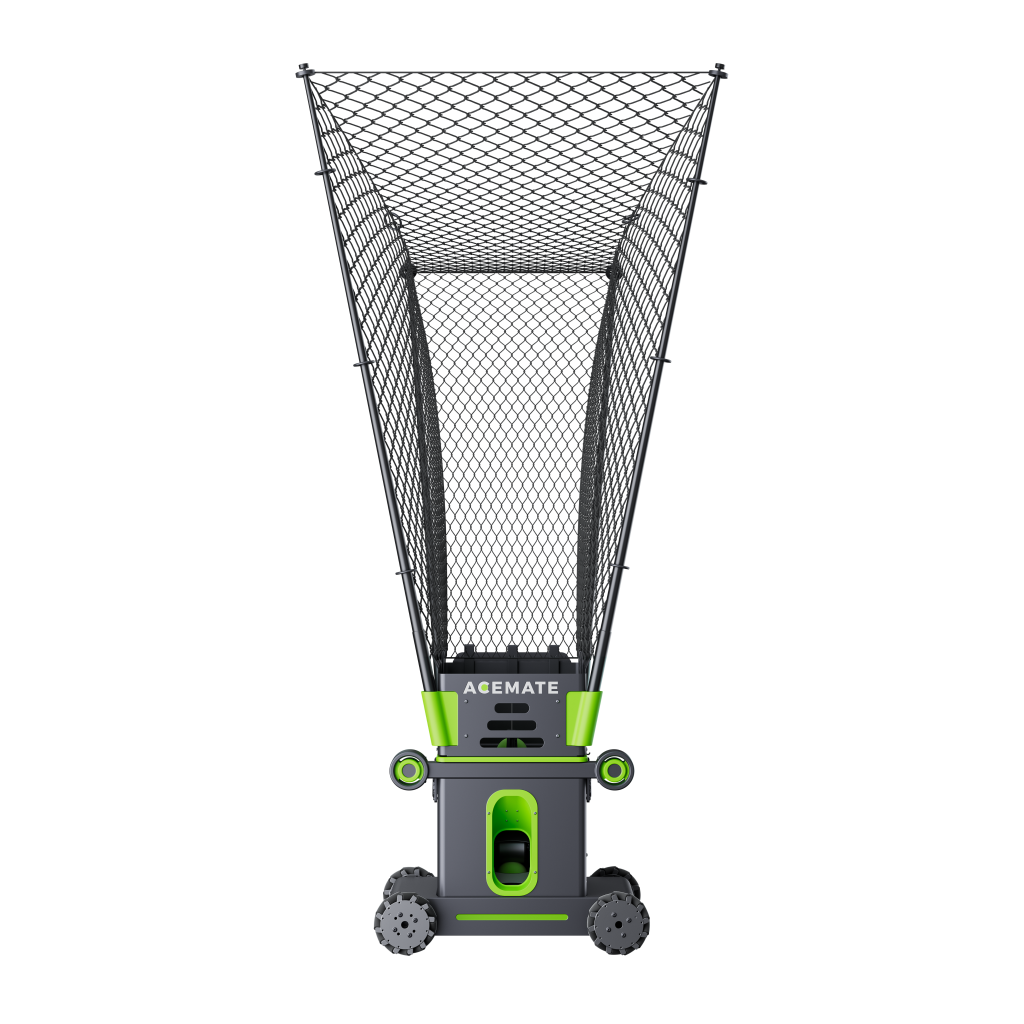
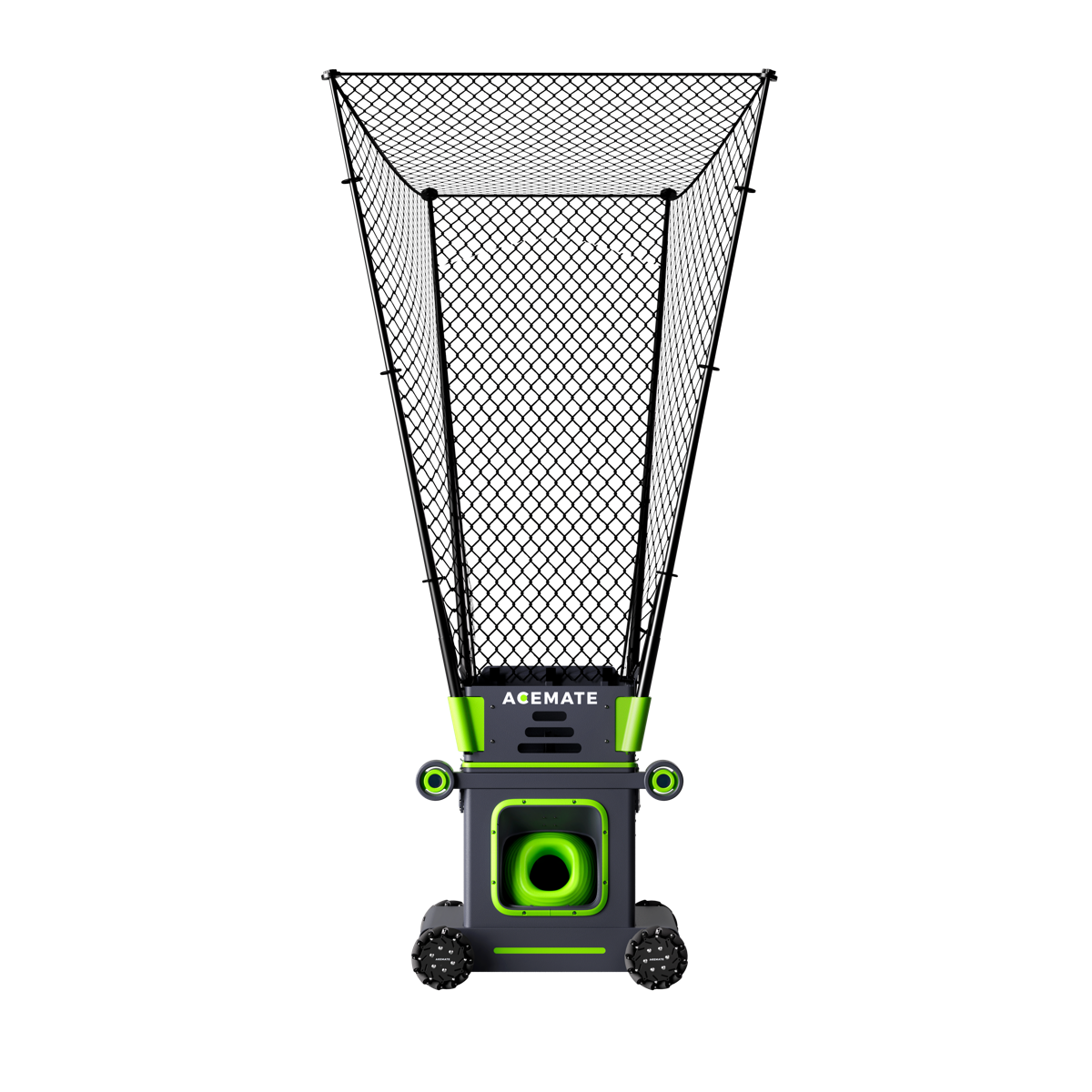

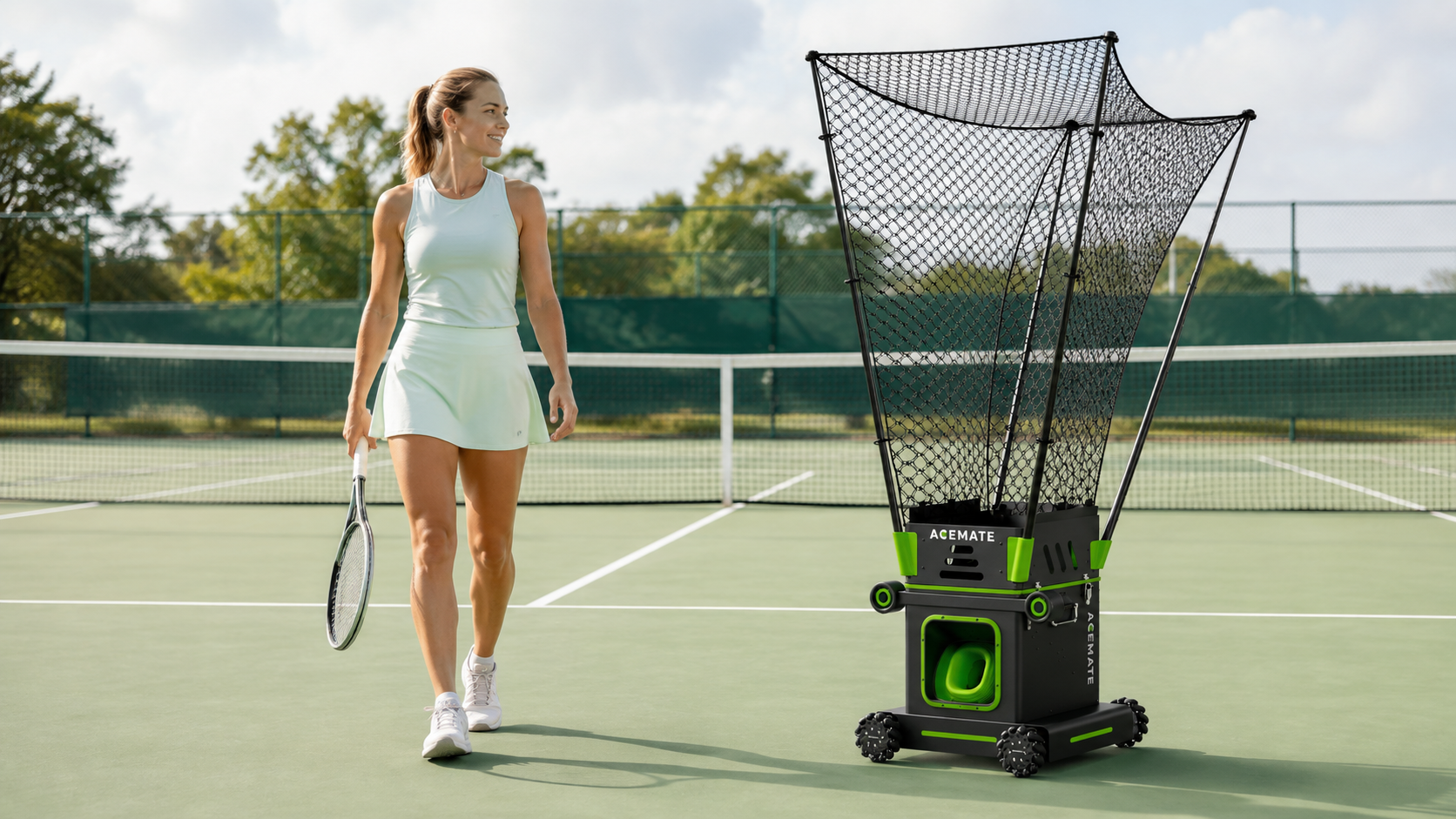

Acemate S10 PRO is a candidate for advanced solo practice when you want configurable drills alongside interactive rallies. To judge whether it fits, start with the exercise you need to build. “Programmable” should describe useful control over your session, rather than act as a shortcut for quality.
This guide compares published capabilities and offers a buying framework. It does not claim that a particular machine produces better competitive results.
- Define the pattern first. Specify the shots, recovery positions and variation you want.
- Separate repeatability from uncertainty. Both can be useful, but they require different settings.
- Try the workflow. Creating, changing and stopping a drill matter as much as the menu of options.
Quick Verdict
| Your requirement | What to evaluate before purchasing |
|---|---|
| A repeatable two-shot exercise | Whether you can configure each required delivery and repeat the sequence |
| Less predictable movement | Which elements vary, and whether that variation stays within your intended exercise |
| Interactive exchanges | How the machine handles suitable returns, not merely random feed direction |
| Practice across several sessions | Whether the saved setup is easy to identify and use again |
S10 PRO merits a closer look if the third requirement matters alongside the others. For an exclusively programmed-feed purchase, evaluate the exact sequences rather than assuming interactive movement is essential.
1. Turn your training goal into a machine requirement
“I need harder practice” is difficult to shop for. “I want a deep crosscourt ball followed by a shorter ball” is much more useful. It identifies a pattern you can ask a supplier to demonstrate.
Write down the starting position, intended response and recovery position. Then identify which aspects must stay consistent. You may want the same first ball while varying the second. Alternatively, you may want a stable sequence so you can focus on one technical adjustment.
These are proposed exercises, not claims that every machine can execute every combination. Use them to test capability before purchase.

Illustrative court and target layout—not an App screenshot or a guaranteed shot combination.
2. Compare the programming you can actually use
For advanced practice combining configured feeds and returned-ball exchanges, our shortlist starts with S10 PRO. Its App lets you place targets on a court view and adjust individual deliveries. Sequential and random feeds provide different ways to organise the exercise.
| Model | Published programming capability | Control route | Purchase implication |
|---|---|---|---|
| Acemate S10 PRO | Placement, speed, trajectory and spin; sequential or random feeds | Acemate App | Configure feed practice and retain a separate interactive Rally mode |
| Spinshot Plus-2 HS | 12 custom drills | Drill Maker App; panel access to drills | Compare the programmable feeder workflow with your required sequence |
| Spinfire Pro 2 | Custom and quick drills; random modes | App and remote | Check the combination of programmability and operating controls |
| Lobster Elite Grand Five LE | 12 custom drills, six shots per drill | Model-specific digital controls | Check whether the six-shot format covers your planned exercise |
Sources: each manufacturer's product page in Sources. These descriptions do not establish that every model supports the same parameter combinations. S10 PRO's product page does not specify a maximum custom sequence length; we do not invent one.
Here is a buying-validation example: configure one deep target and one shorter target, then compare a fixed sequence with random delivery. S10 PRO's published target placement and sequence options support the ingredients of that plan. Whether your exact pace, spin and landing-point combination is suitable should be checked together, rather than inferred from separate maximum figures.
This is a more concrete reason to shortlist PRO than the word “smart.” If the requirement is programming alone, the named feeder alternatives also have documented capabilities. For the wider product comparison, use the tennis ball machine buying guide.
3. Use speed and spin as settings, not as a ranking system
Advanced practice does not always require maximum pace. A slower delivery may be useful when isolating a movement or testing whether a sequence works. Increasing pace makes sense only when it supports the intended exercise.
Similarly, published spin categories do not establish a directly comparable spin rate. Avoid assuming that two manufacturers measured spin under the same conditions. Maximum speed and maximum spin may also describe different operating settings.
Ask to see the combination you need. That is a better purchasing test than collecting the largest number from each specification sheet.
4. Decide when you want the returned ball to matter
A fixed sequence lets you repeat a problem. An interactive exchange adds a different requirement: the machine must respond to a suitable return. Neither is a complete substitute for the other.
For example, a competitive club player may want programmed practice on one day and connected rally practice on another. That gives S10 PRO's combined capabilities a clear role in the weekly plan.
The S10 PRO modes guide can help you identify what to ask for during a demonstration. Do not assume a mode name proves a particular match situation can be reproduced.
The choice comes down to this
Make a shortlist around one drill you will repeat and one you will vary. Add interactive rally capability if that fills a real gap in your practice.
If S10 PRO can demonstrate those requirements within your court and budget constraints, it has a concrete place on that shortlist. If you are comparing it with S10, use the model-selection guide to decide whether the additional capabilities are relevant.
For a practical next step, check Acemate demo locations and confirm which model the host offers. For a specific setup or delivered quotation, contact the Acemate team.
FAQ
Do advanced players always need maximum ball speed?
No. Select pace to serve the exercise. A high published ceiling alone does not prove the machine can reproduce your desired combination of pace, placement and spin.
Is random feeding the same as rally interaction?
No. Random feeding changes the delivered ball. Rally interaction involves responding to a suitable returned ball.
Should I choose by the number of preset drills?
Not alone. Confirm that the settings and customisation support exercises you will use. A smaller useful set may be more relevant than many unsuitable presets.
