


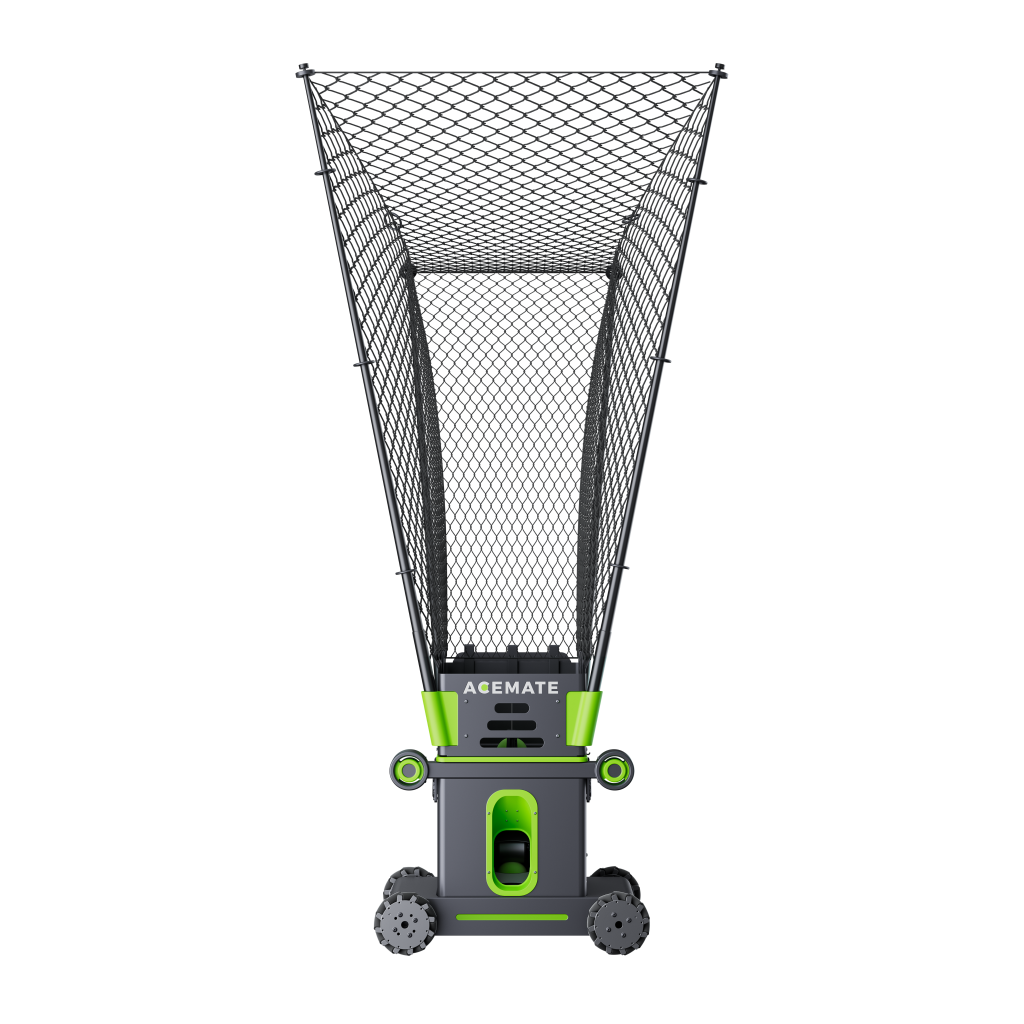
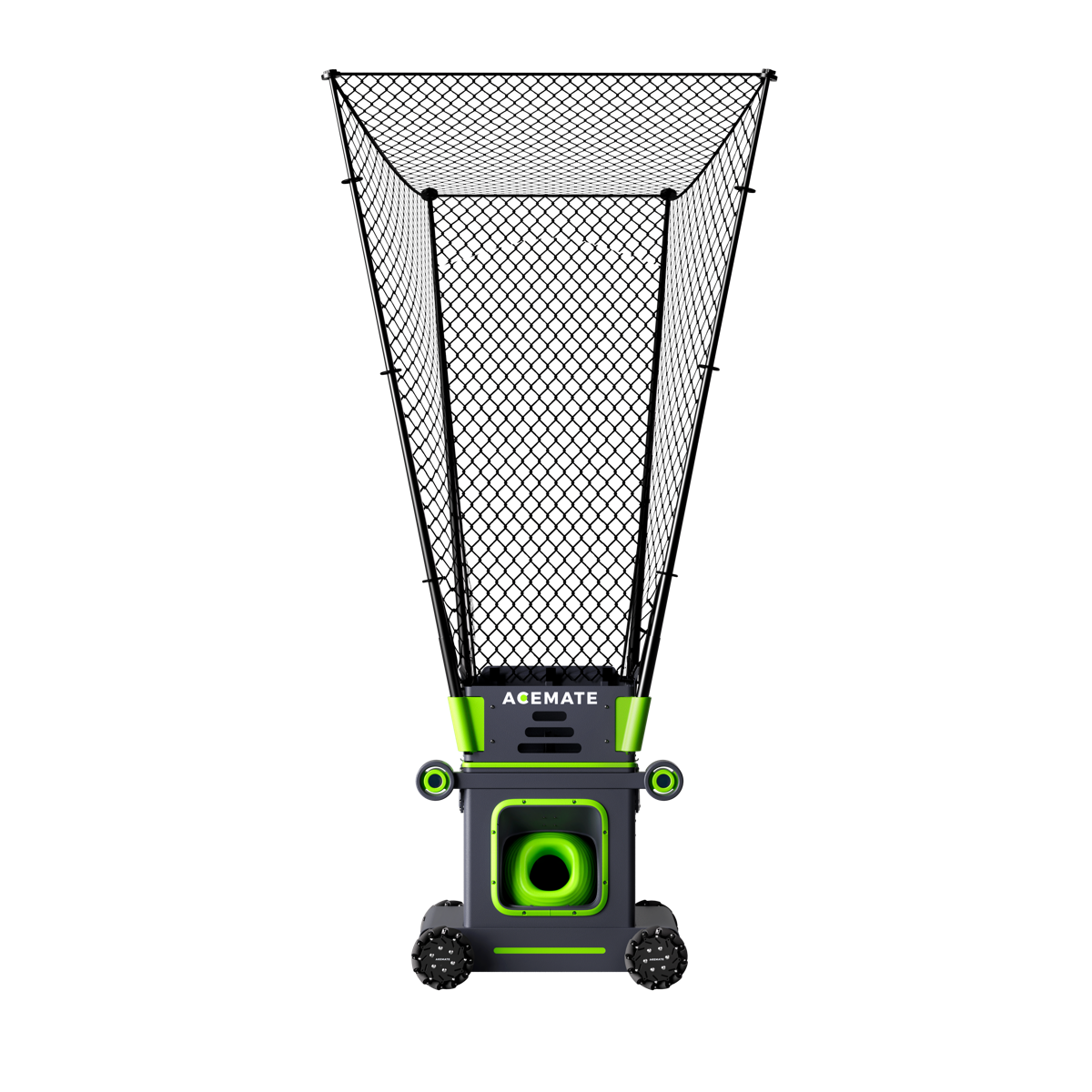

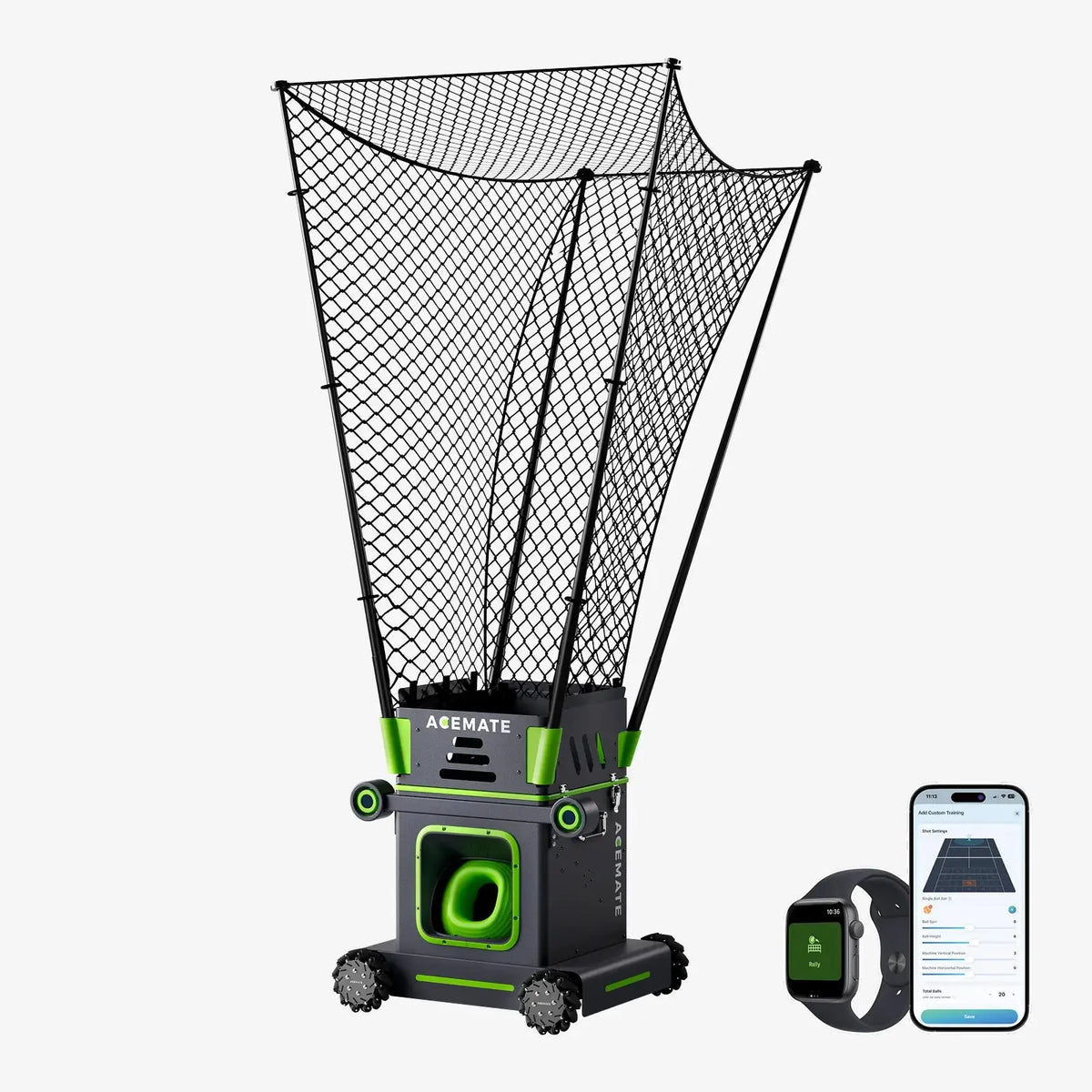
Acemate S10 PRO is worth evaluating for private coaching when you want one machine for both configurable feeding and interactive rally exercises. The buying decision should begin with your lesson structure: what the machine will deliver, what the student will practise and what you will observe.
This is a procurement guide based on published capabilities, not a claim that any machine will increase lesson revenue or replace a coach.
- Buy for a defined lesson task. Identify the exercise the equipment will support.
- Evaluate intervention controls. You need a practical way to stop, explain and restart.
- Include the working day. Transport, charging and setup must fit the schedule you actually run.
Quick Verdict
For a private coach who wants repeated feeds and serve-plus-one or rally work in one purchase, S10 PRO is our recommended Acemate starting point.
| One-to-one lesson task | Published S10 PRO capability | Teaching and purchase boundary |
|---|---|---|
| Repeat a chosen delivery | Ball Machine mode controls pace, spin, placement, trajectory and rhythm | The coach sets an appropriate task and observes the student's execution |
| Configure a shot pattern | App-defined targets and sequences | Validate the required combination; do not assume all maximum settings work together |
| Practise the ball after a serve | Serve mode receives the player's serve and supplies a return | This is serve-plus-one work, not a machine firing a high, downward serve at the student |
| Continue an exchange | Rally mode responds to suitable incoming balls | Misses and collection still require a planned pause |
The recommendation concerns the variety of lesson tasks, not a proven increase in teaching efficiency or income.

Illustrative one-to-one lesson structure—not a measured teaching outcome.
1. Design the lesson before choosing the machine
Consider a one-to-one lesson with three blocks: observing the student's current stroke, repeating a targeted exercise and applying it in a less predictable situation. Decide where the machine would help and where you would continue feeding or hitting yourself.
As an illustrative lesson structure, use a configured feed while observing the student from an appropriate safe position. Pause to explain an adjustment, then repeat the task. A later Serve-mode block can focus on the player’s serve, recovery and next ball. These are proposed coaching uses of published functions, not measured teaching outcomes.
This avoids buying a broad promise such as “AI coaching” when the actual need is much more specific. The coach still decides what to teach, how to interpret performance and when to change the task.
S10 PRO's published combination of app-configurable drills and rally interaction gives you different functions to assess. A demonstration should show their place in your lesson, rather than simply show the machine operating.
2. Separate useful automation from unsupported efficiency claims
Equipment can change how a lesson is organised. That does not establish a particular percentage of time saved or additional paid capacity. Measure the workflow yourself before building a business forecast around it.
During a trial, record setup, explanation, drill changes and ball collection. Also record whether the student receives the intended exercise. A fast setup has limited value if you then spend the lesson correcting an unsuitable feed pattern.
Treat automatic ball recovery claims carefully. Receiving suitable returns is different from gathering loose balls. Keep a collection routine and clear the playing area as required.
3. Ask for the same coaching demonstration across candidates
Compare S10 PRO with other premium models using one common lesson brief. For example, ask for a repeatable forehand exercise, a change in placement and a pause for feedback.
There are different ways to support that workflow. Spinfire Pro 2's official page describes remote control and a single-ball function. Spinshot Plus-2 HS documents app-based custom drills. These features should be checked as specific controls, not replaced by a broad assumption that stationary machines lack smart operation.
For S10 PRO, also ask to see a suitable rally exchange and what happens when the student's return cannot be received. That is the additional interaction you are evaluating.
The training-mode guide helps prepare that conversation. Do not interpret the name “Serve” as proof of a high, downward serve delivered at professional match speed.
4. Check the purchase against the whole working day
A stationary teaching location and a travelling coaching business have different constraints. Before ordering, check the vehicle opening, lifting route, storage access and available charging arrangements.
S10 PRO lists a 100-ball capacity and a net machine weight of 23.0 ± 0.5 kg. The capacity is relevant to a chosen feed block; the weight is relevant to loading and venue changes. Its maximum five-hour runtime applies to Ball Machine mode with launching wheels at 3,000–4,000 rpm.
Do not infer a full day's operation from a maximum battery figure. Ask about the modes and settings that match your lessons. Consecutive movement-heavy sessions may have different power demands from repeated feeding.
Request an itemised quotation and the warranty terms that apply to your use. Keep consumables, accessories and future replacement costs separate from the initial machine price. The running-cost guide explains why a published accessory price does not establish its replacement frequency.
The choice comes down to this
Choose your machine around a lesson you can describe and demonstrate. S10 PRO deserves consideration when configurable exercises and interactive exchanges both have an identifiable role.
For a broader comparison, review the premium buying guide. Then ask for the exact setup, intended use and complete quotation before committing.
For a practical next step, check Acemate demo locations and confirm which model the host offers. For a specific setup or delivered quotation, contact the Acemate team.
FAQ
Can a tennis robot replace the private coach?
No. Equipment can support exercises, but it does not establish the teaching judgement or individual supervision needed for a lesson.
Should a coach buy the largest hopper available?
Not automatically. Capacity matters when it supports the planned exercise. Consider pause points, instruction time and the ball-management routine too.
Does a maximum battery figure cover consecutive lessons?
Not necessarily. Confirm the expected runtime for your actual modes and settings. Plan charging and breaks around that information.
